I need to finesse my ChatGPT briefing skills This is supposed to be people in a pub listening to a joke.
When people used to congregate in pubs in large numbers and with great frequency – this is going back a few decades – they’d often end up telling jokes. Some were good, some were bad and there were many that you wouldn’t want to tell, much less hear, today. But they’d always be preceded by the joke teller saying something along the lines of:
‘Here’s a good one…’
‘Reminds me of the one about the…’
‘Did you hear the one about the bloke…’
‘Stop me if you’ve heard this one…’
So not only did everyone know that a joke was coming, they also knew that it had been told before; that it was a joke that was ‘doing the rounds’. It didn’t make the jokes any less funny that you knew this (assuming they were funny at all, but even then most people would chuckle out of politeness or early-onset drunkenness), but it did mean you knew the tellers hadn’t made the jokes up themselves. In my various circles of friends, colleagues and family members, I’ve never met anyone who’s actually made up a joke. And yes, I have asked. A timely bon mot or rejoinder, definitely. They can be funny as hell, but they’re generally of the moment. They don’t suddenly get shared by groups of people in pubs. If the exact same circumstances that provoked the funny response were to happen again, elsewhere, and you were there along with a group of people who hadn’t witnessed the previous occasion, and you remember the wording of the witty response and you get the timing right, then yes. You could pass it off as your own smart witticism and bask in the glory. But it’s a big if.
But something has changed. Well, a lot’s changed. People don’t go to pubs quite as much or as often as they used to. And when they do, I’m pretty sure they don’t stand around regaling one another with jokes. (I’m happy to be corrected on this.) People are still telling jokes on social media. But they’re not of the shaggy dog variety, with long set-ups before a (hopefully) side-splitting punchline. And they’re not snappy little knock-knock jokes, either. Jokes online generally include funny responses to items in the news, or comments made by public figures; or they’re observations about the human condition and the craziness of modern life. And they can be fucking hilarious.
The biggest change for me, though, is how people are quite happy to pass off what for the sake of brevity I will call ‘gags’ as their own work. I didn’t notice this trend on Twitter, but it’s rampant on Threads. People see a gag and instead of reposting it, they’ll go to the trouble (OK, it’s not THAT much trouble) of copy & pasting, just so that it looks like the product of their own wonderful sense of humour.
Why do people do this? I mean, it sometimes works if what they want is a few hundred likes and maybe a few extra followers, but what else in in it for them? And how does it make them feel? ‘Wow, that gag I nicked was really popular! I must steal more stuff from other people and develop a greater sense of fraudulently acquired self-esteem!’
I don’t get it. But then I’m someone who still laughs at doctor-doctor jokes.
The year 2024 marks the 50th anniversary of Mike Oldfield’s Tubular Bells reaching the summit of the UK album charts. The music probably sounds ploddy and pedestrian to today’s listeners, but it had a huge impact on the youngsters of the 1970s. And not just amongst the hippies.
Oldfield’s debut solo album went on to sell 15 million copies and spend an aggregate of five-and-a-half years on the UK chart, although it only reached number one some fifteen months after it was released. (Coincidentally, the album it knocked off the top spot, pop quiz lovers, was Oldfield’s second solo outing, ‘Hergest Ridge’.)
I listened to Tubular Bells again and again, simultaneously studying every word of the sleeve notes. That’s what people did in those days. That’s what I did, anyway. ‘Cover by Hipgnosis’. ‘Packaging by Shorewood’. ‘Jack Bruce appears courtesy of ECM Records.’ I lapped it all up. For a really good examination of the way the LP shaped our lives back then, I thoroughly recommend David Hepworth’s evocative book about the era, ‘A Fabulous Creation’. Anyway, it was on the back cover of Tubular Bells that I first came across an example of what we today call microcopy.
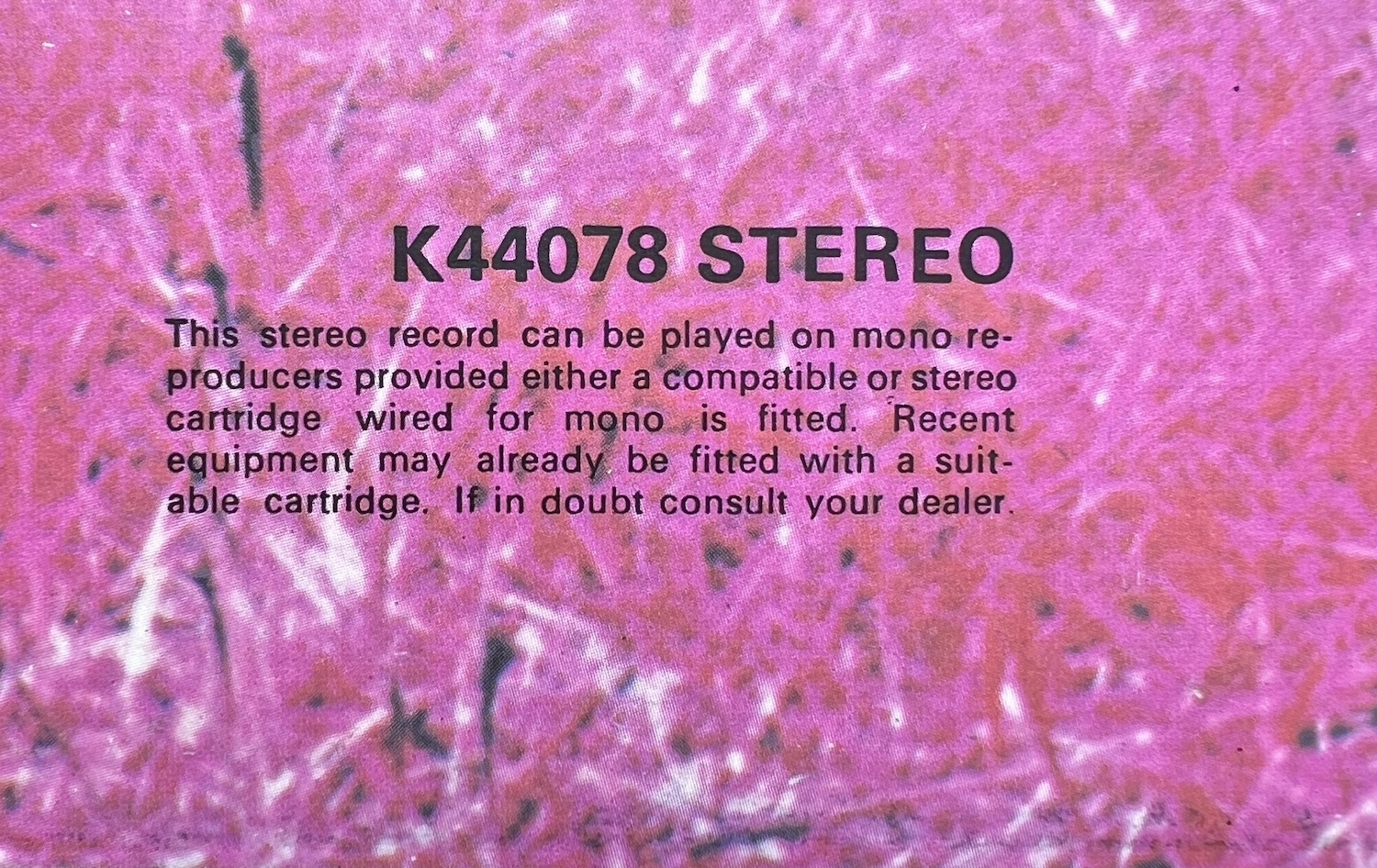
First, a bit of context. It had been standard practice since the introduction of stereo records to include a paragraph warning about the dangers of playing the album on incompatible mono equipment.
(Small print from the back cover of Frank Zappa’s ‘Hot Rats’)
The message was more or less redundant as stereo had been around for a decade or more. I’m pretty sure no one was ever in sufficient doubt as to feel the need to ‘consult their dealer’. But still, there it was, sitting awkwardly straightlaced on albums by The Electric Prunes and Captain Beefheart, an ever-present reminder of finger-wagging officialdom staring up at you as you roll your joint.
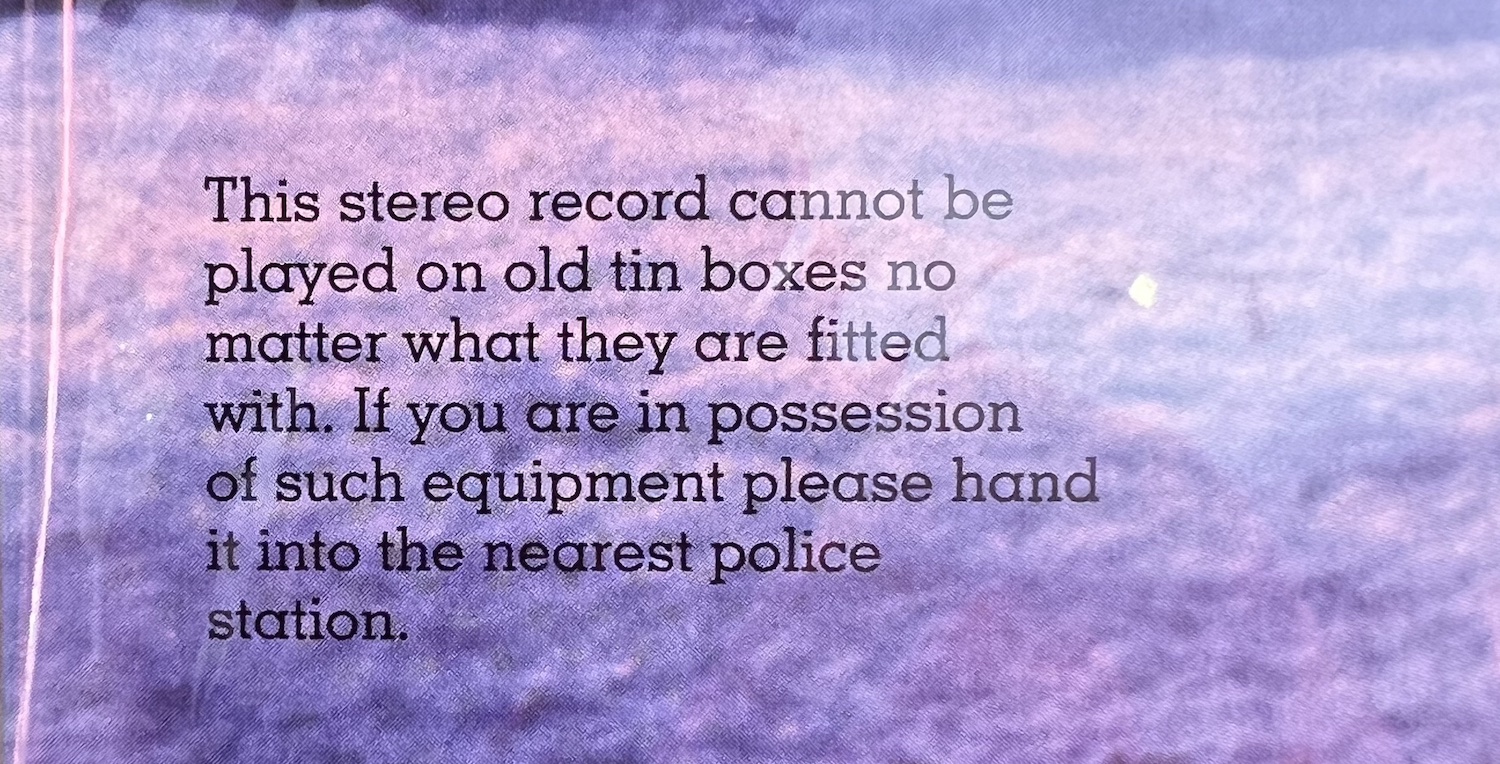
But then Tubular Bells arrived. With its many themes and layers, its complex time signatures and the (for then) unconventional use of multiple overdubs, it was music that demanded to be heard properly. So some bright spark at Virgin – this was the newly established label’s first release – decided that the boring, over-familiar message on the cover could do with a bit of a rewrite.
To my young eyes, this subversion of the official message merely added to the overall effect the music was having on my young ears. It was confident and funny, and you couldn’t argue with the sentiment.
That first sentence is the killer. ‘Dead right’, you think to yourself. ‘Thank god I exchanged my Dansette Bermuda for this swanky new Sanyo G2611 Music Centre’. The second sentence probably raised a smile back in the age of Python and Milligan, but today I look at it and think they could have tried a little harder. Even ‘hand it into your nearest museum’ works better.
I reckon this was my first exposure to what’s now known in copywriting and UX (user experience) circles as microcopy. It’s when a writer looks beyond the headline and the main ‘selling’ text, and starts thinking about the incidental stuff – the add-ons, the mandatories, the everyday nuts & bolts.
The aim is to add an extra something. That could mean helping a user navigate a website in a simple, friendly way, writing an email’s ‘snippet’ – the line of text you see before you open an email – to make it more engaging, or just having a bit of fun with some boring bit of instructional copy. Done well it can make the reader feel warmer towards a brand. But overdo it or get the tone wrong and the reader immediately sees what you’re trying to do and thinks ‘oh FFS give it a rest!’
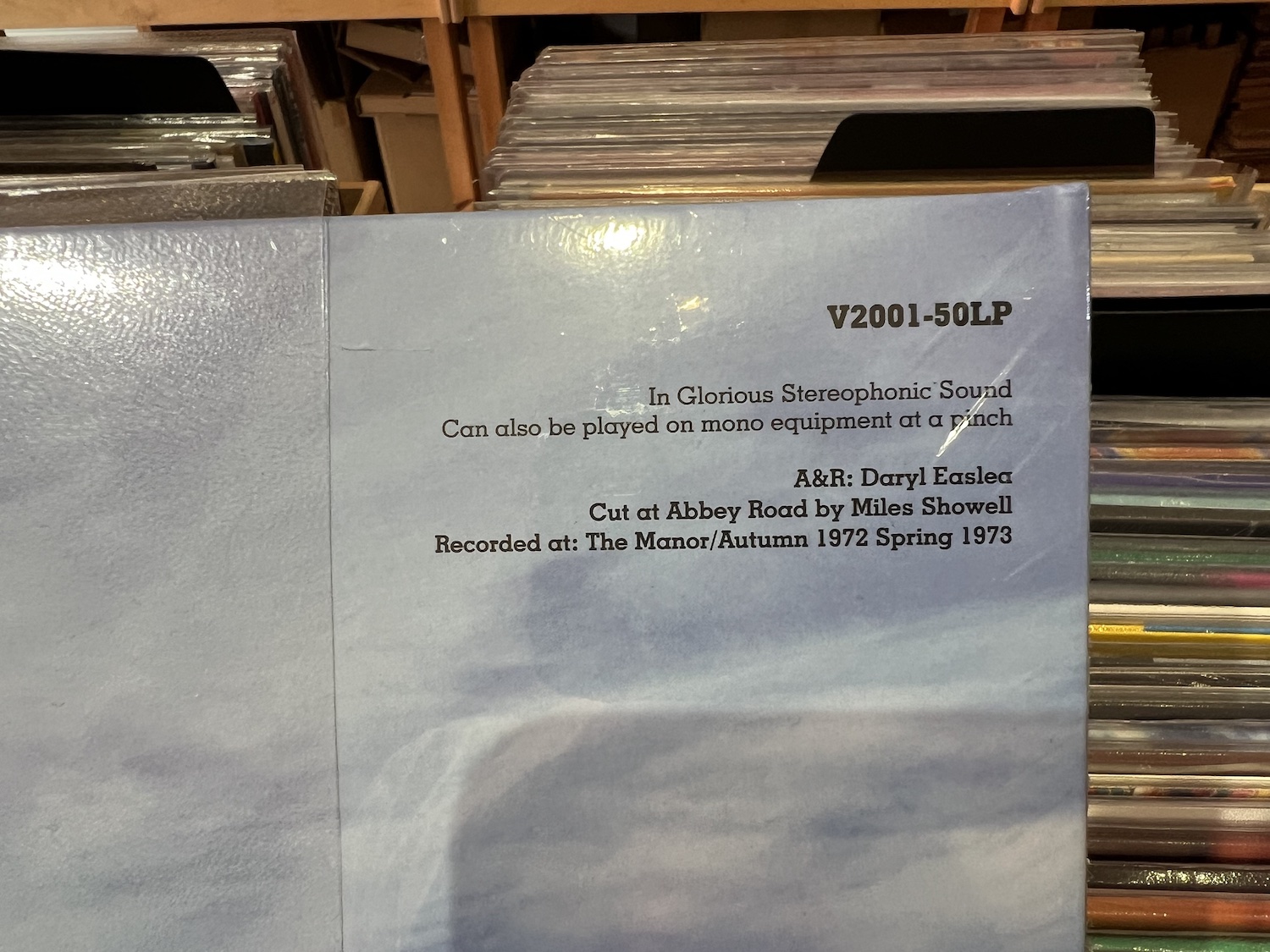
Incidentally, the sleeve-note writer of the 50th anniversary issue of Tubular Bells (it was released in 1973, remember, not reaching number one until a year later) had a go at updating that iconic paragraph. It’s shorter (good) and at least tries to retain the same tone (also good), but with mono record players not being a thing for over 60 years and everyone who owned one being dead, I’d argue that it didn’t need to be there at all.
Have you been impressed by any examples of microcopy? Or seen other examples where the writer should have reined it in? Tell me about them.
Yesterday I met up with an old school friend and we went for a long walk along the clifftop. At one point we decided to run instead of walk. After all, it’s what we’d have done when we were 14 or 15. And you’re never too old for a run!
It was all going well until I suffered a heart attack.
My friend stopped and announced that he was going to go for a cup of tea. This seemed entirely reasonable to me. I didn’t question it. It didn’t even occur to me to ask where on earth he might find somewhere to buy tea. We were miles from anywhere. I let him go, but to be on the safe side I decided to call the air ambulance.
The emergency dispatcher asked for my exact location. I had no idea. I only knew that I was near the Cornish coast, or possibly the south Devon or west Dorset coast, and that there were no roads nearby. Then in a moment of inspiration I remembered what3words. In case you don’t know, what3words is an app that divides the entire world into three-metre squares and gives each a unique code consisting of three words. There’s a what3words for everywhere on Earth, from your bedroom to the centre circle at Wembley Stadium.
I opened the app and found the unique combination of words that indicated precisely where I was. Isn’t technology amazing? However, I took an instant dislike to one of the words. It was an ugly word with, I thought, far better alternatives. So when I related the what3words to the air ambulance dispatcher, I substituted a synonym for the word I found distasteful.
It seemed only seconds later that the helicopter arrived. It settled noisily on the grass and presently three paramedics emerged. They gathered their first-aid kits and walked over to where I was standing. Paramedics attending emergencies always walk, have you noticed that? You’d expect them to run, but there are good reasons why they don’t.
As soon as they reached me I offered an apology. “Sorry I didn’t give you the correct what3words,” I said. “I’m amazed you managed to find me.”
“No worries,’ said what I took to be the chief medic. “We guessed you wouldn’t like one of the words. We didn’t like it much, either.” Her colleagues nodded in agreement. “So we thought of a few synonyms, too. I guess we got lucky in choosing the same one you did. Anyway, would you like some medical treatment?”
“What sort?” I asked.
“We can give you CPR, we’ve got a defibrillator in the chopper, or we can lay you down and perform open heart surgery. Up to you.”
I considered these options. Truth was, I was feeling perfectly fine now and none of the choices appealed much. Particularly that last one. I really didn’t like the idea of them cutting my jumper and t-shirt, making an incision down my chest, prising open my ribcage and doing whatever was necessary to get my heart beating. Especially as it was already beating. I could imagine them bent over my still-conscious body performing their intricate work, the four of us being kept cool by the slowly turning rotor of the helicopter and me suffering the indignity of being sniffed at by inquisitive dogs.
“No thanks,” I said. “I reckon I’ll be fine from now on.”
“OK, no problem. By the way, where’d your mate go to get his cuppa? Do you know if there’s a toilet there?”
That was strange. How did she know about my friend?”
“Yes, there is.”
That was even stranger. How could I possibly know there was a toilet at wherever my mate had gone? But there was. It was just down the promenade from the beach café at Boscombe Pier. And in the blink of an eye I was there in that café, drinking tea with my friend. I could hear ‘Something In The Air’ playing from someone’s transistor radio. It was 1969 and we were 15 years old and these were happier times.
Yes, of course it was a dream. Me, run?
The air ambulance taking off, with one of the medics giving me a hearty thumbs-up.
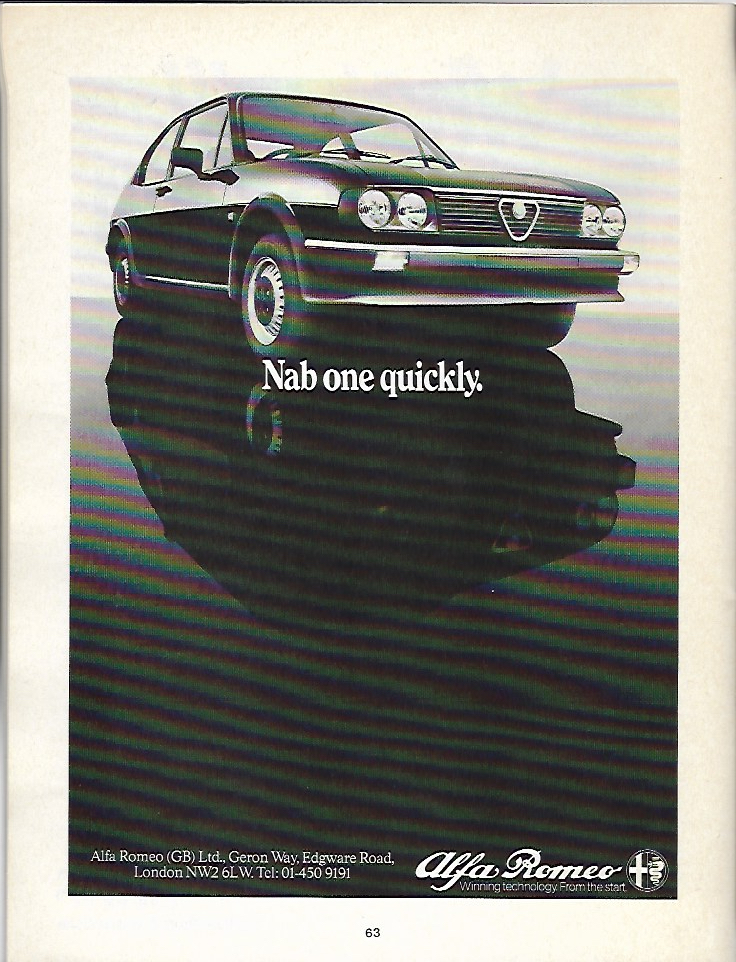
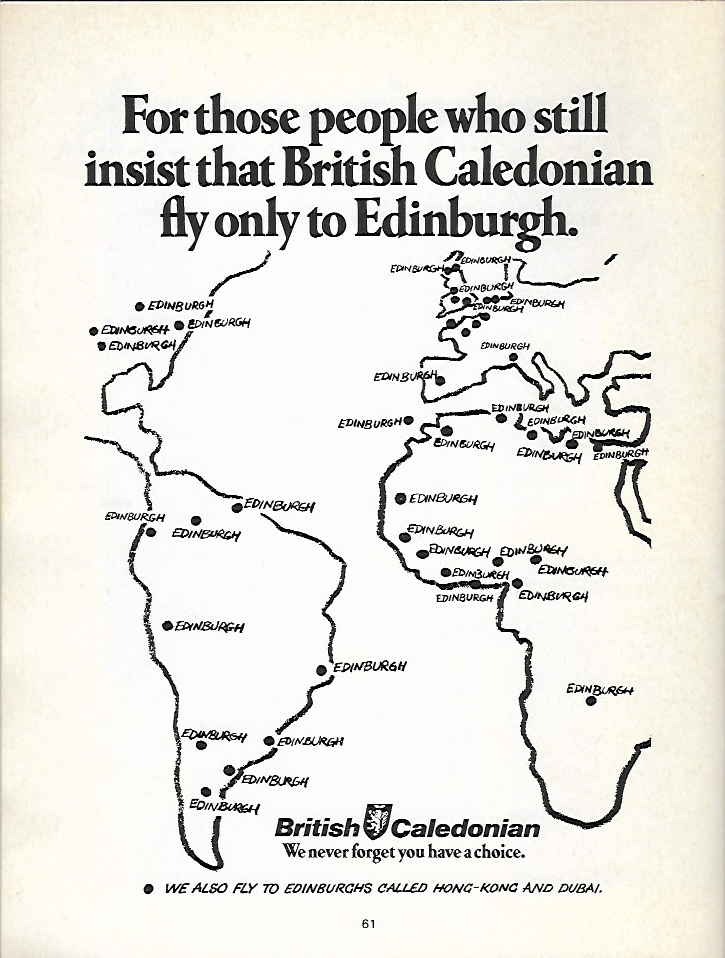
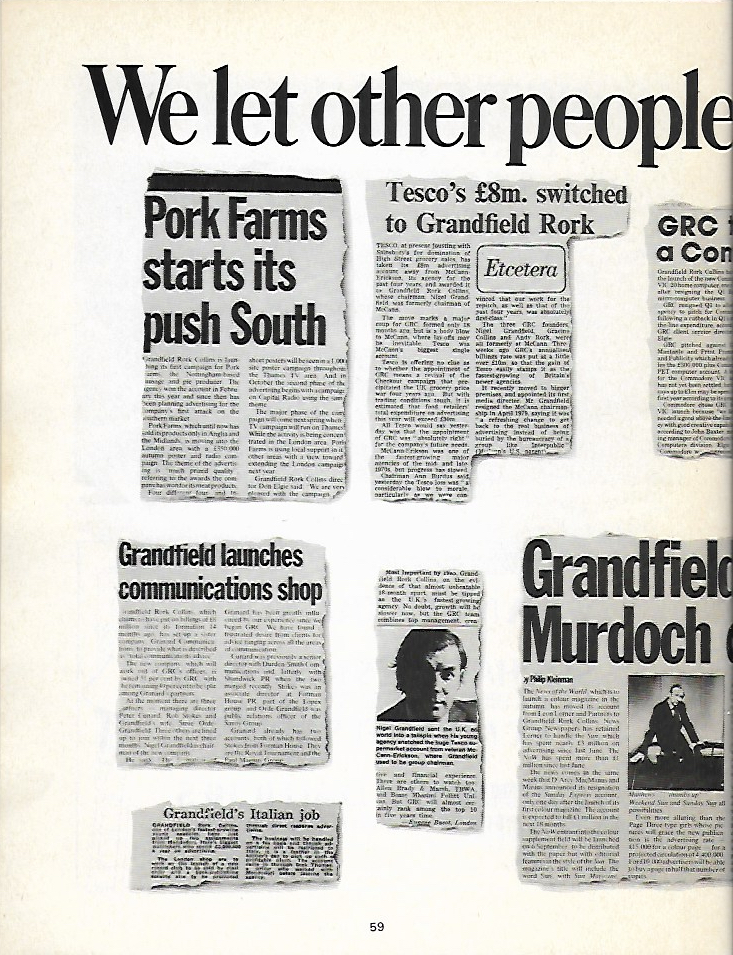
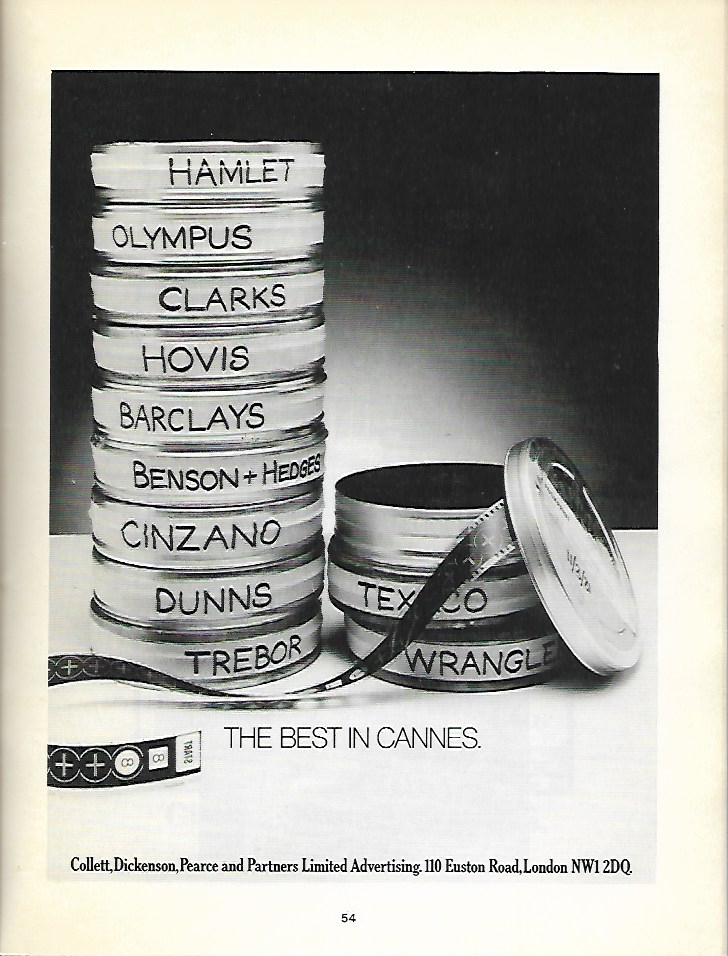
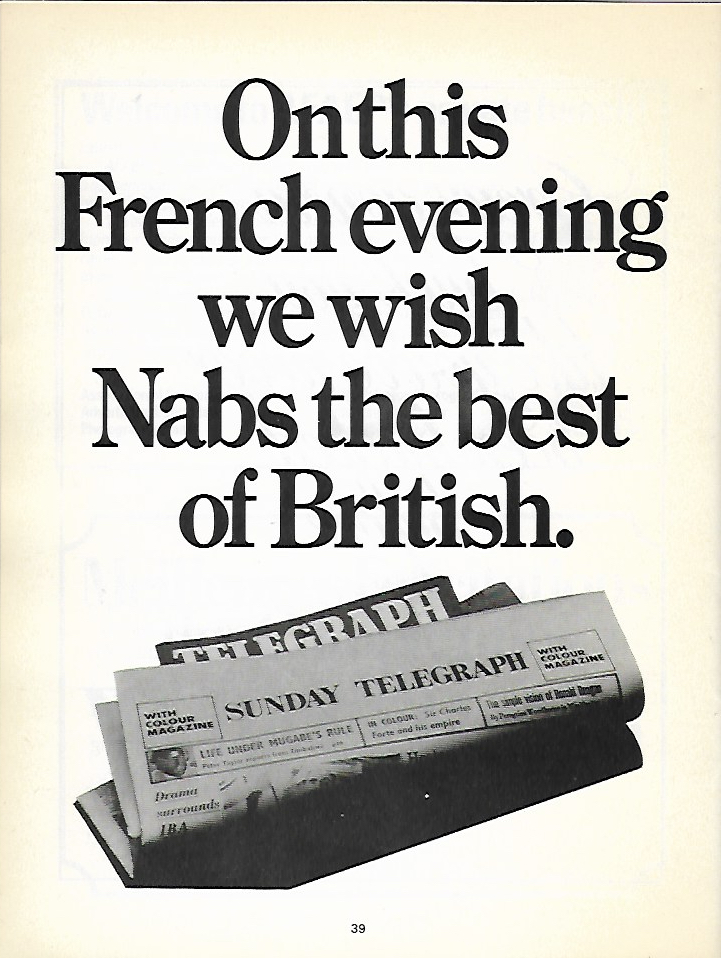
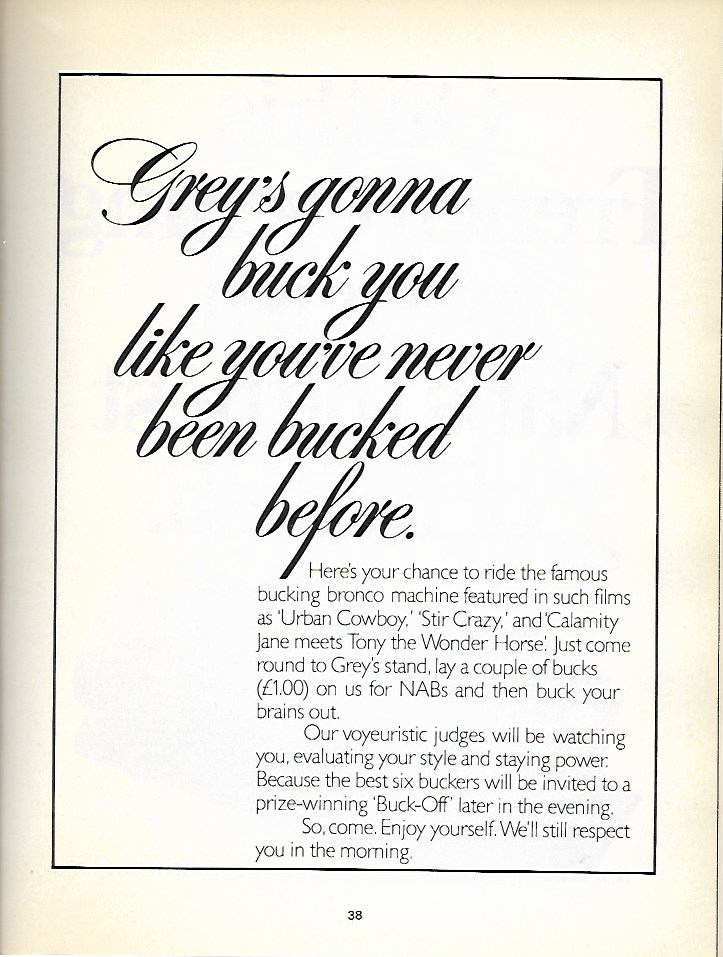
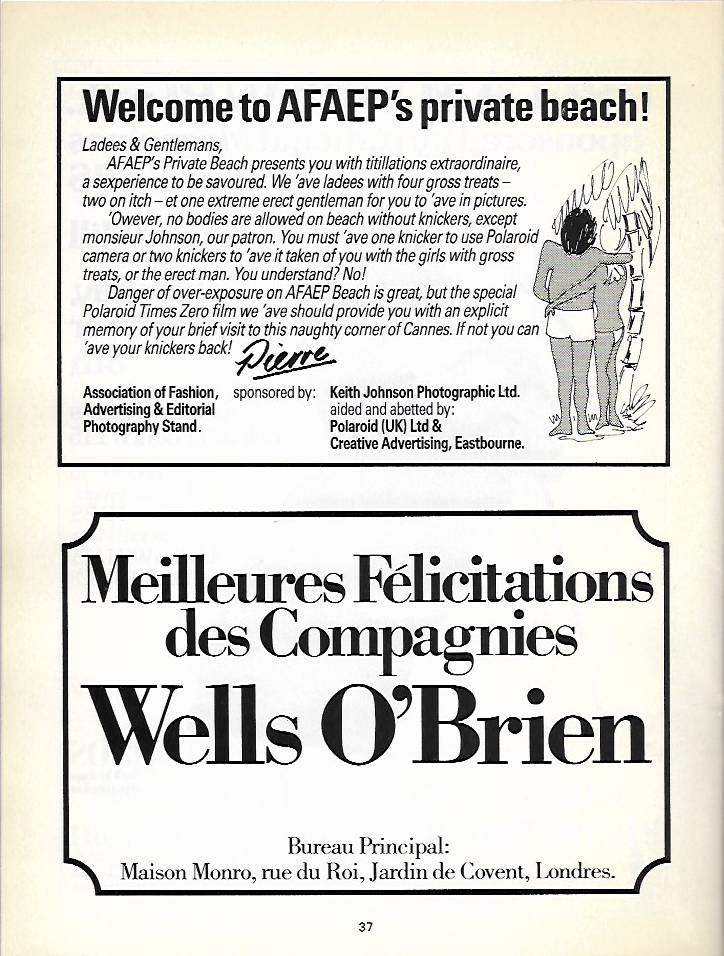
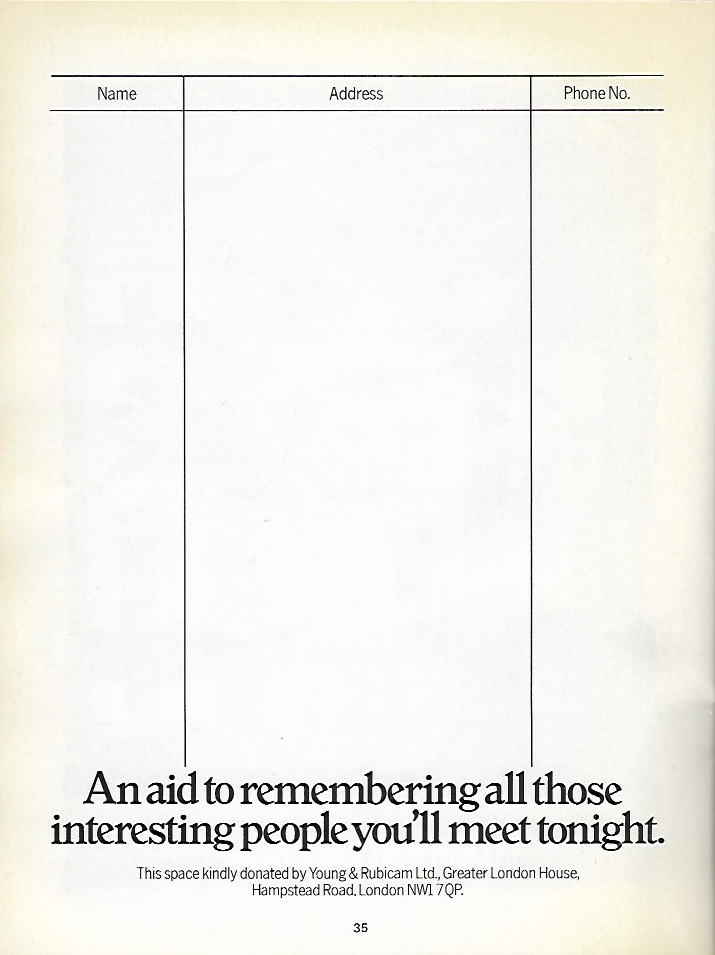
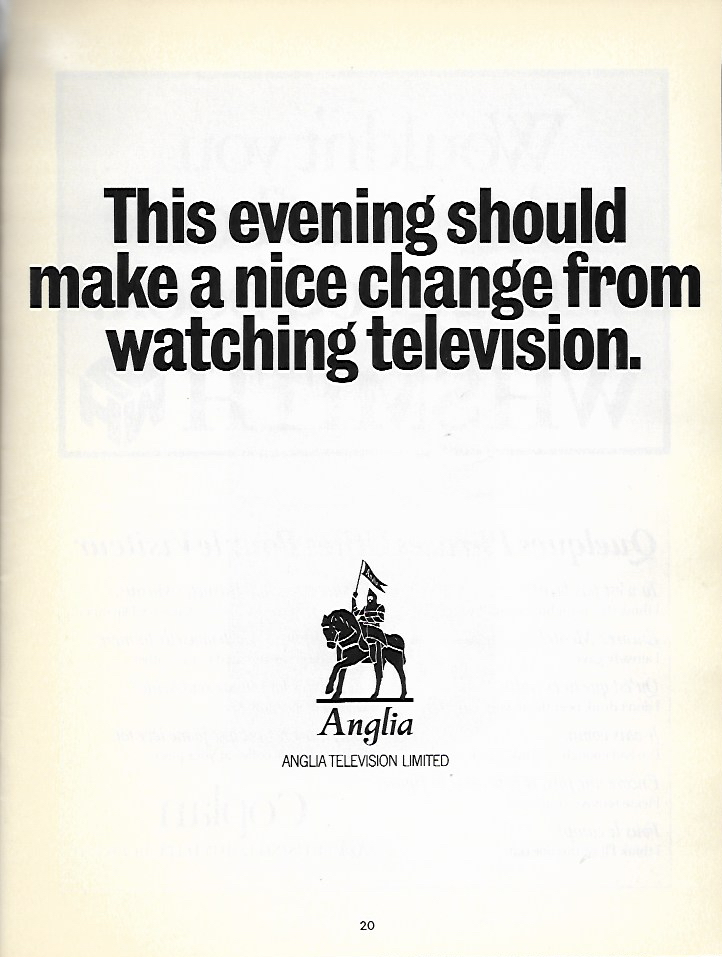
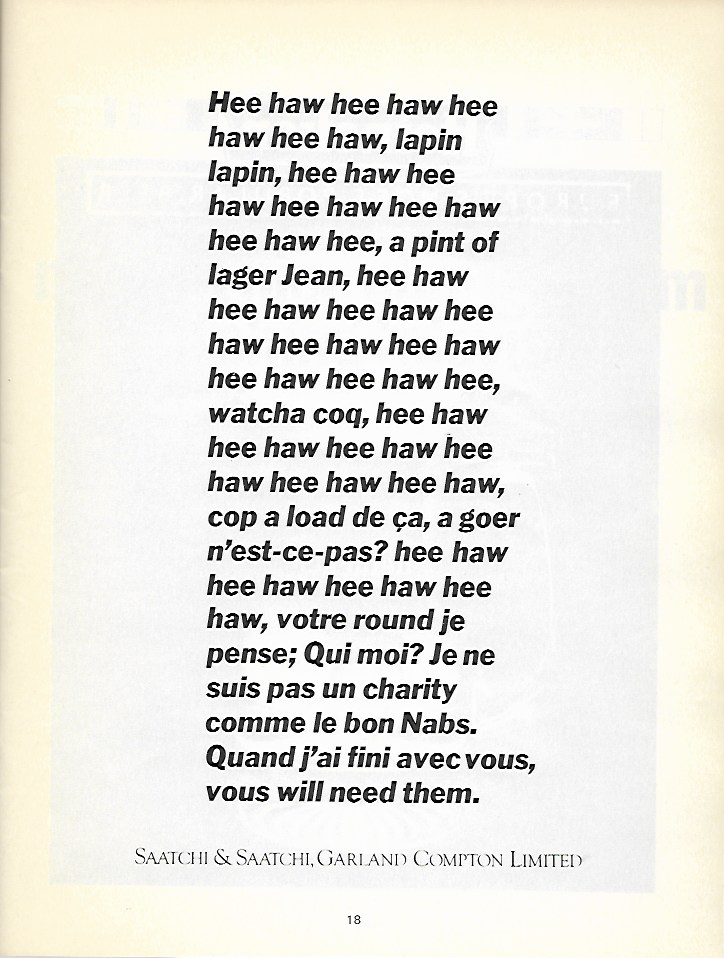
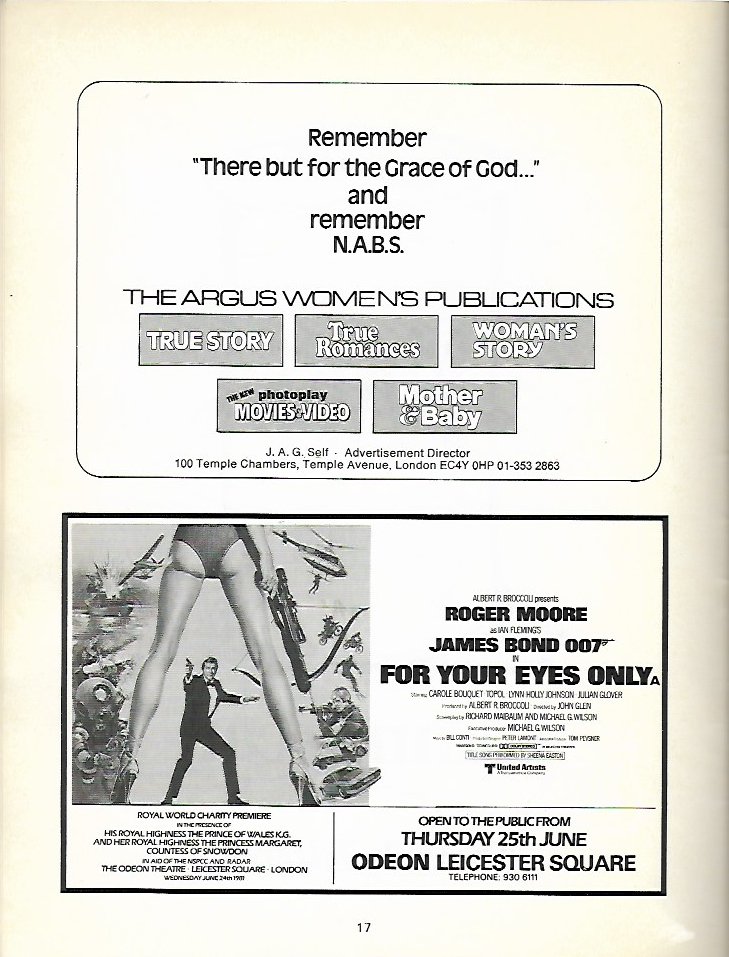
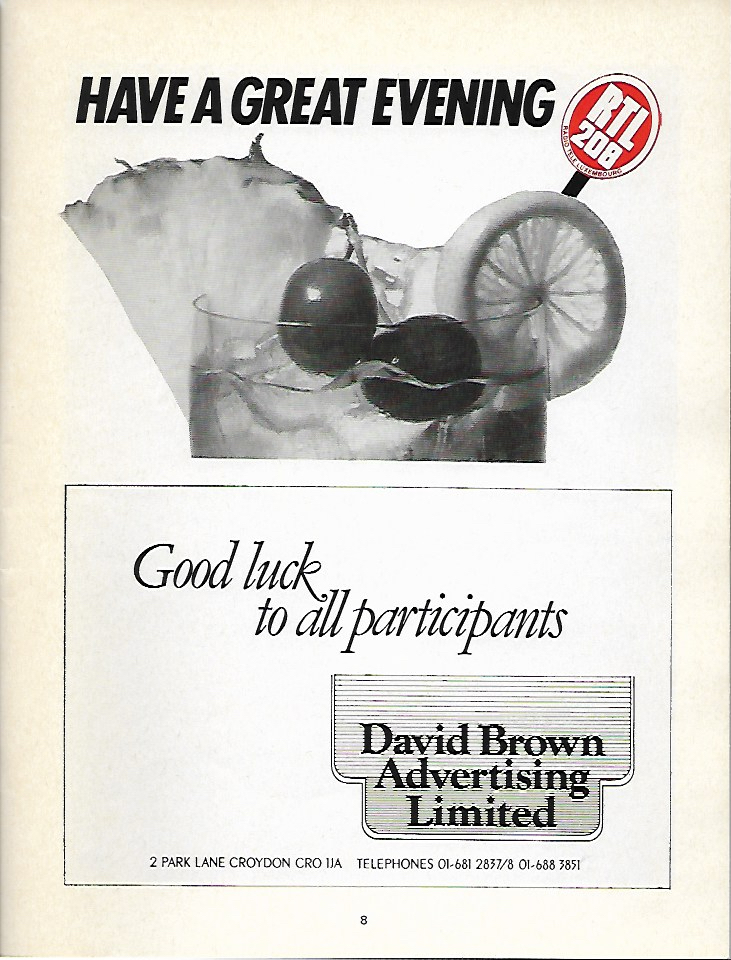
Events like this, I mean. Or the programme that accompanied it. Or the adverts that helped pay for both.
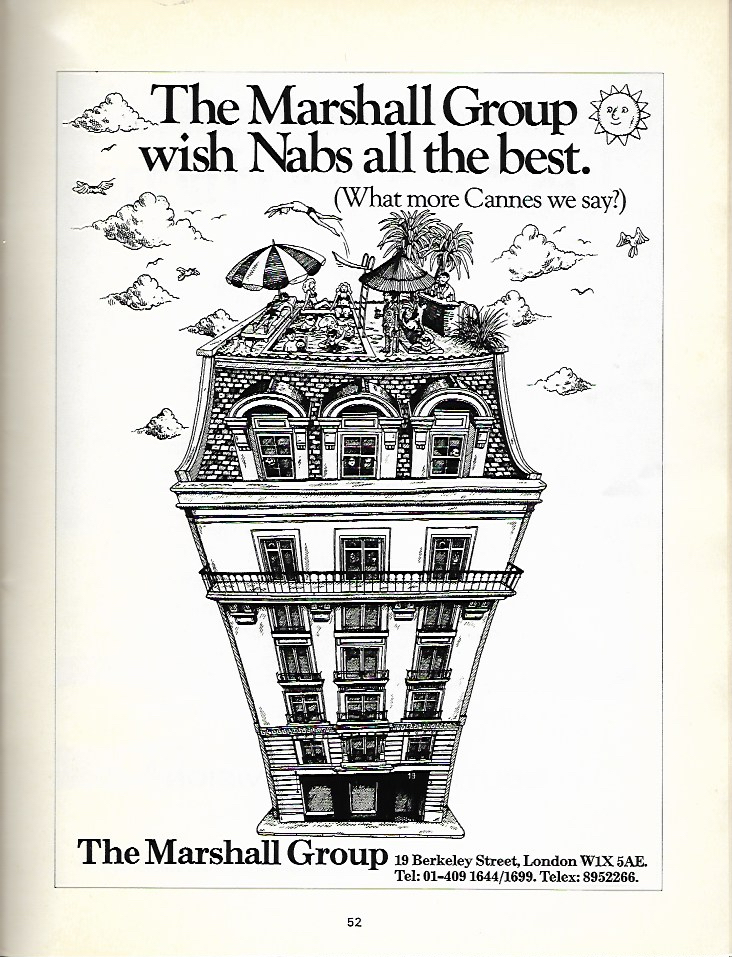
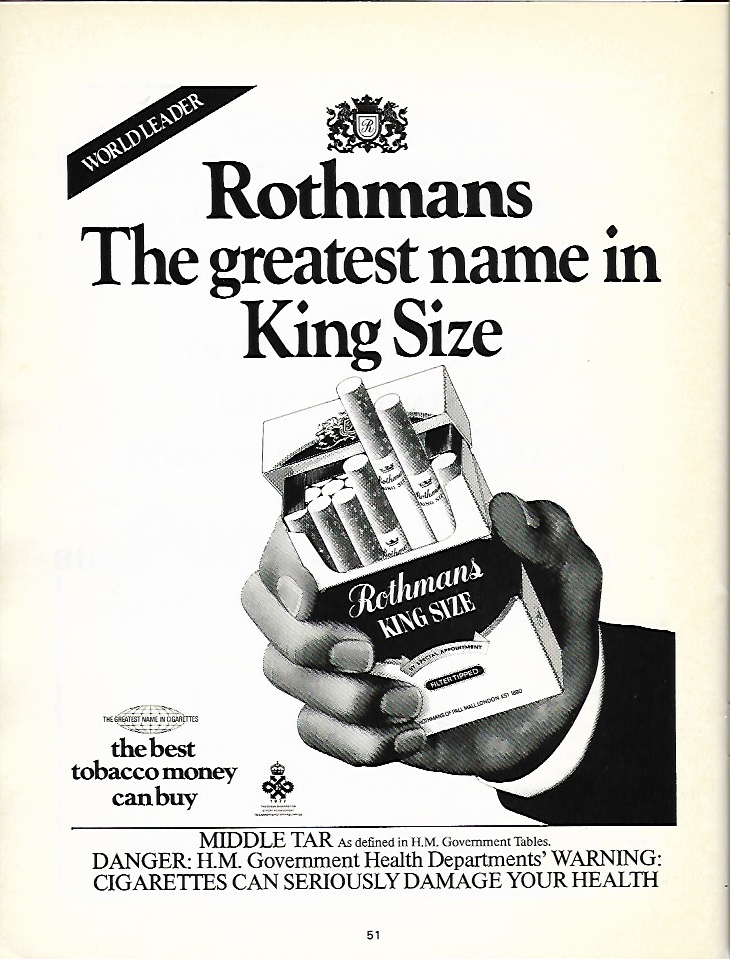
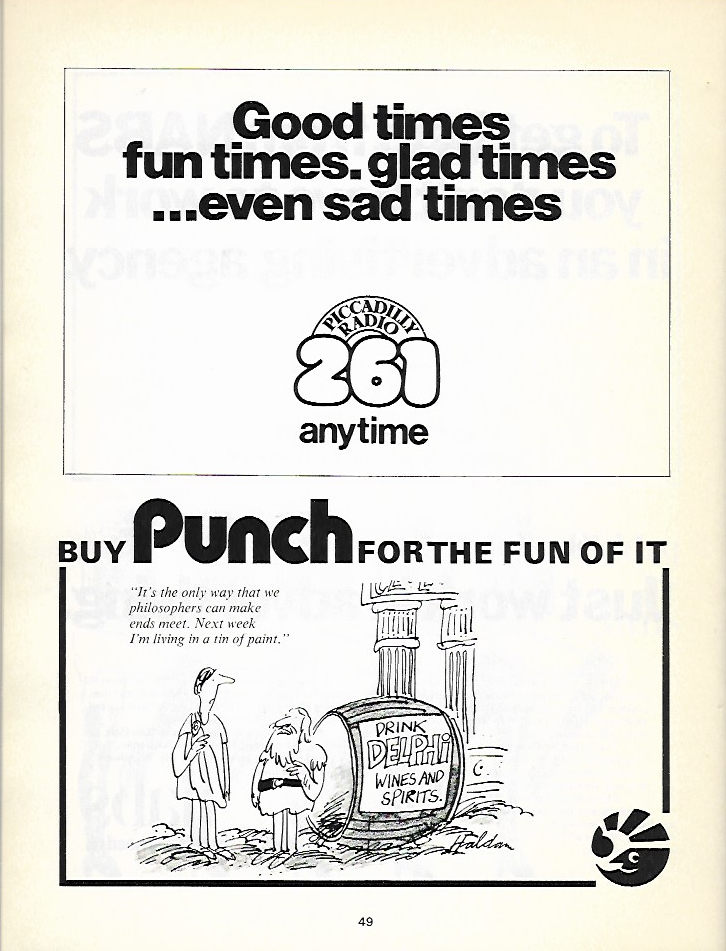
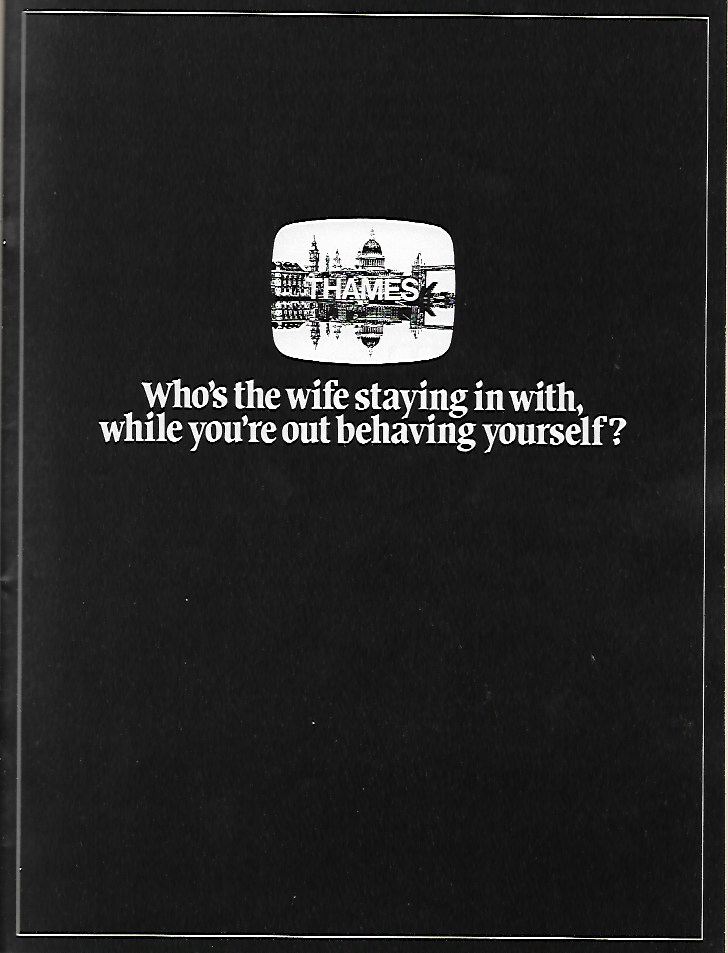
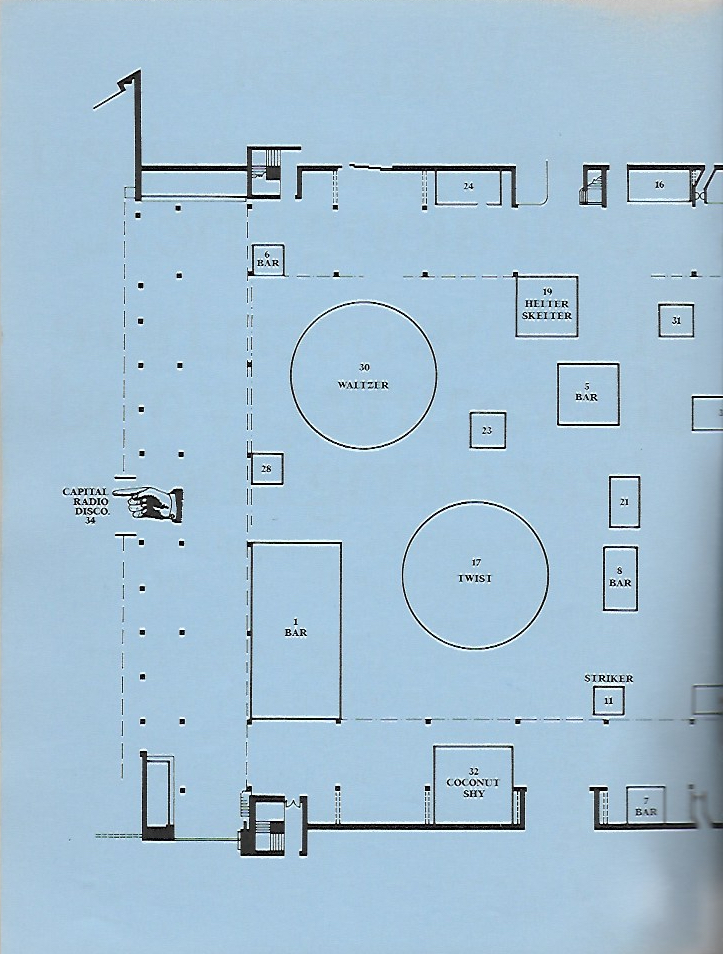
The NABS (National Advertising Benevolent Society) annual get-together was a big thing in the 70s and 80s, and 1981’s Cannes-themed jamboree was perhaps the biggest of the lot. The charity hired one of the massive halls at London’s Olympia and filled it with plastic palm trees, fairground rides, a casino, merchandise stalls, agency and media stands, a Capital Radio disco and at least eight bars. This was an advertising event, after all.
The adjacent hall had been booked by the Mind & Body show, a calm, joss-stick infused, whale-song soundtracked new-agey event. I’ve often wondered whether any attendees of either event ever walked in through the wrong door…
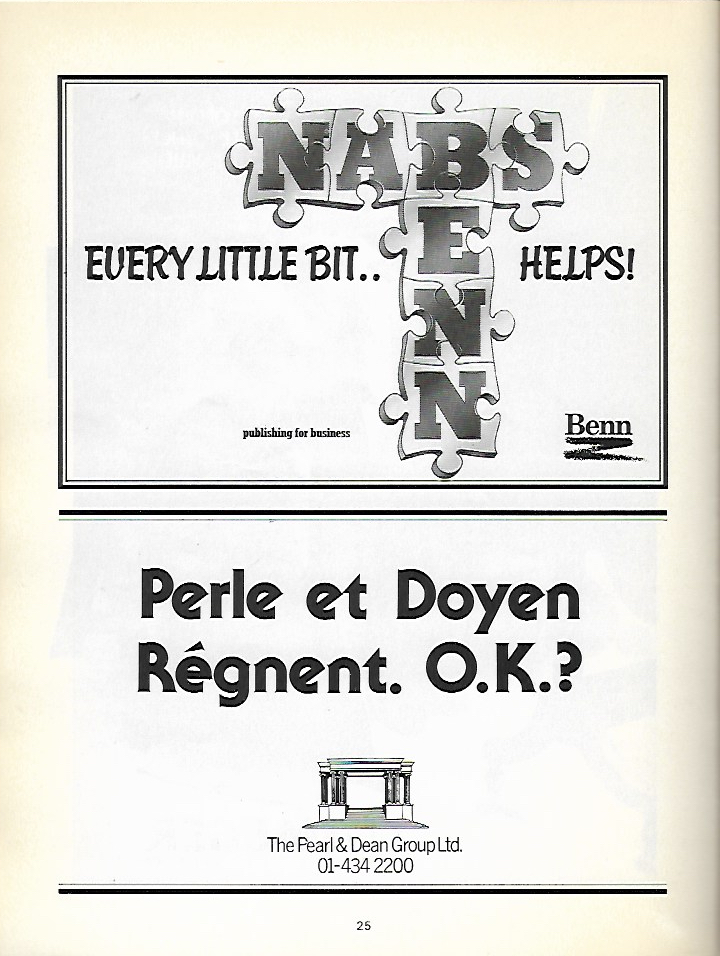
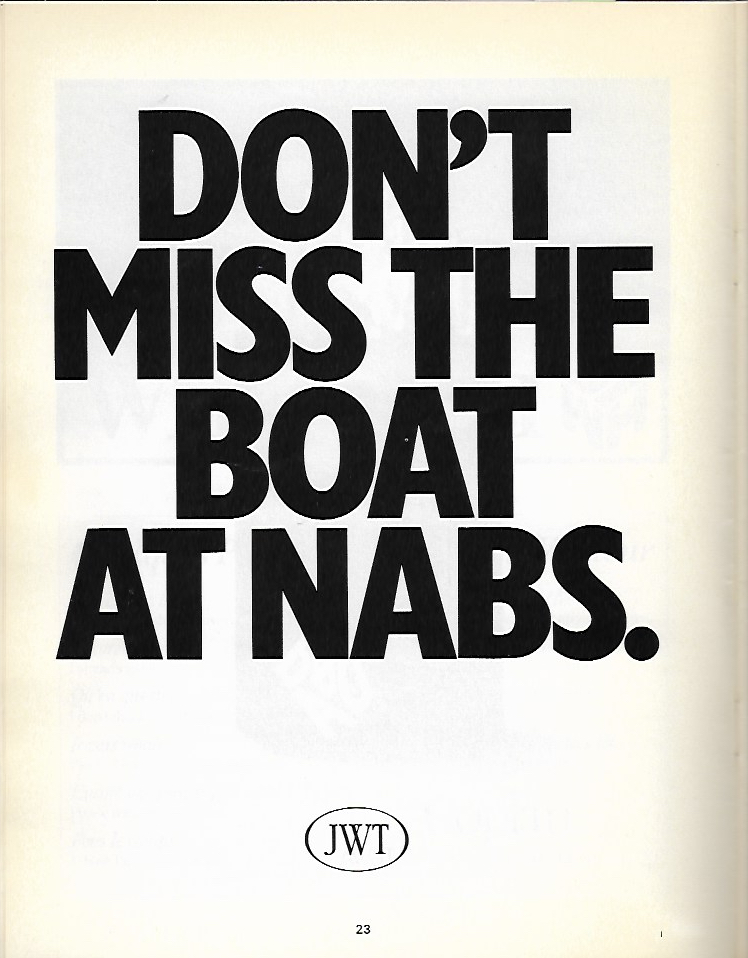
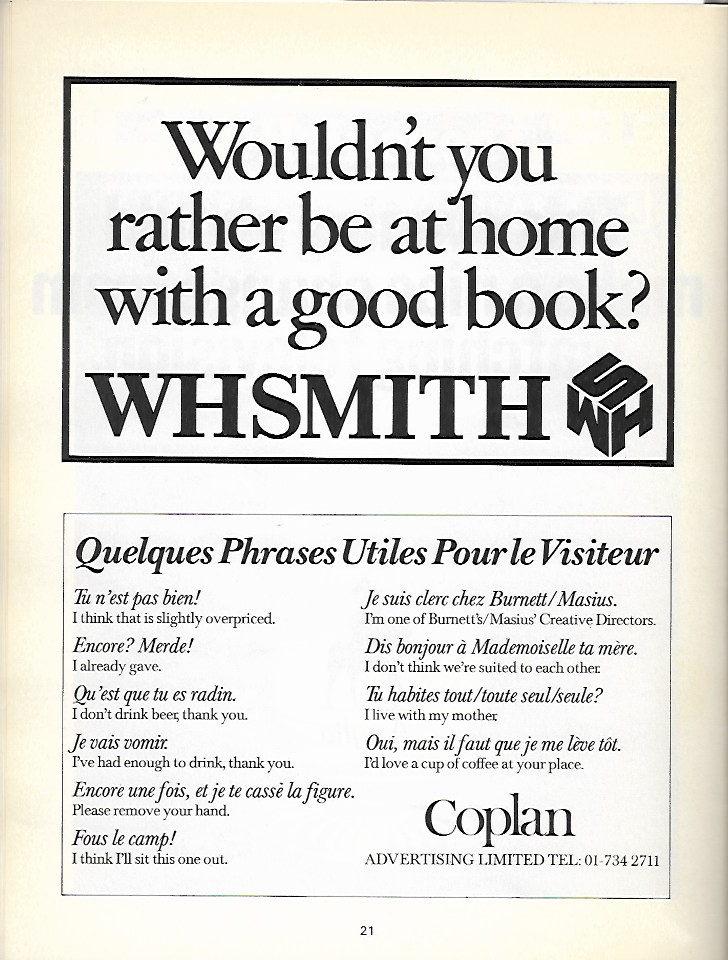
1981 was my first year in advertising. Little did I know then that today, some forty years later, I’d be sitting at home scanning in the pages of the NABS in Cannes programme before chucking it away and getting on with more important stuff. But you’ll be glad I did. Because, my god, the ads. The puns! The typography! The sexism! And don’t kid yourself you wouldn’t have been like that back then. You would have. Or else you’d have been next door sniffing incense and knitting yoghurt.
I have quite a few reasons for not wanting to return to the office. Some I share with everyone, and some are perhaps unique to me.
The universal ones are:
Commuting time. It’s two to three hours out of my day even when things go well. But if I miss a connection I can arrive at work needing another shave. It costs a ludicrous amount of money, too
Other people’s music. It’s not that their choice might be awful, it’s just that I can’t skip to the next track or turn the volume down or get them to play Bonobo instead. Noise-cancelling headphones help, but it’s not a good idea to wear those all the time
People eating crisps. Or apples. Or cooking a bloody fish in the microwave. Or whispering to each other. Or moving away from their desk in order to take a call but instead standing right next to yours. You know, it’s possible that at heart I’m not a people person
Interruptions. I can ignore an email for a while, but not some bugger who turns up at my desk waving bits of paper. Writing needs continuity of thought
Getting a proper coffee. My aeropress makes the perfect cup in six or seven minutes, tops. At one place where I’ve worked it involves going on a mighty journey, joining a long queue then returning empty-handed because you forgot you needed to bring your own mug. Plus you have to pay for it!
Lunch. Same as above. At home I can make my own food, support my local shops or even have the odd pub lunch without raising eyebrows
Losing your stuff. Some offices give you a locker, and although it’s a right faff retrieving all your kit in the morning and packing it away again at night, leaving anything out would guarantee it got stolen by the next day
Productivity. I estimate I get around 40% more stuff done when I’m working at home.
Reasons that are more specific to me:
A return to the place where I’m working now would mean IT issuing me with a laptop and sorting out a whole bunch of passwords. (I use my own Mac at home.) It would take ages
I’d probably have to go through the rigmarole of being set up with a new security pass
Others might be able to work sitting cross-legged on a beanbag or swinging from a hammock, but I need a proper height-adjustable chair. Some top agencies have absolutely awful seating. In one place I was told to work on a bench in the kitchen, next to the bin. Even work-experience teams shouldn’t have to put up with that
I’d need a laptop stand and a Bluetooth mouse and keyboard. The IT department would ‘raise a ticket’ and I’d be lucky to see anything before Christmas 2030. Plus, it’s just more paraphernalia to remember to lock away every night
Contrary to received wisdom, I feel I can build relationships with people over Teams and email just as well as I can face to face. It seems more natural – and more neutral
Speaking of faces, I look out of place in any office these days. Come on, all those fit youngsters dashing about and acting cool? I look like I’ve come to fix the photocopier.
So what about the reasons FOR a return to the office? Well, employers always trot out the line about how the office is a place where people can catch up over a coffee, have a laugh, forge friendships, find romance and so on. All well and good, but in reality these are precisely the things most employers would rather didn’t happen at all. People chatting with other people? Next thing you know they’ll be in little cliques, plotting breakaways. Bosses want to see bums on seats.
That being said, I know that it’s different for young people. I’ve had more fun in offices than is fair for one lifetime and met loads of friends that way. If you work in a team, particularly if you’re exactly one half of that team, you do need to be together at least some of the time. For shipping clerks that might mean the local Nero. But for ad bods, the office is infinitely better. A good agency will literally ooze with energy and creativity. And if there’s a decent boozer nearby, well, that’s pretty much all you need.
Were you around in the late 90s/early 00s? You might remember how almost every magazine and newspaper used to come with free CDs and DVDs. Covermount CDs they were called, and they featured games, music, old movies or basically anything that might nudge circulation northwards or demonstrate how, yes, we at Country Living are also on board with this new digital malarkey.
At the same time, every supermarket checkout displayed shiny CD-Roms aimed at encouraging you to hook up to the internet. For a while, the 120mm disc in its various forms must have supplanted the credit card to become the most ubiquitous man-made object on the planet.
That’s after you discount all the others, of course.
Anyway, I found myself collecting these objects for no other reason than I’m a bloke, and collecting useless items therefore comes naturally. By the mid-noughties I’d amassed several hundred. Then I had an idea of what to do with them.
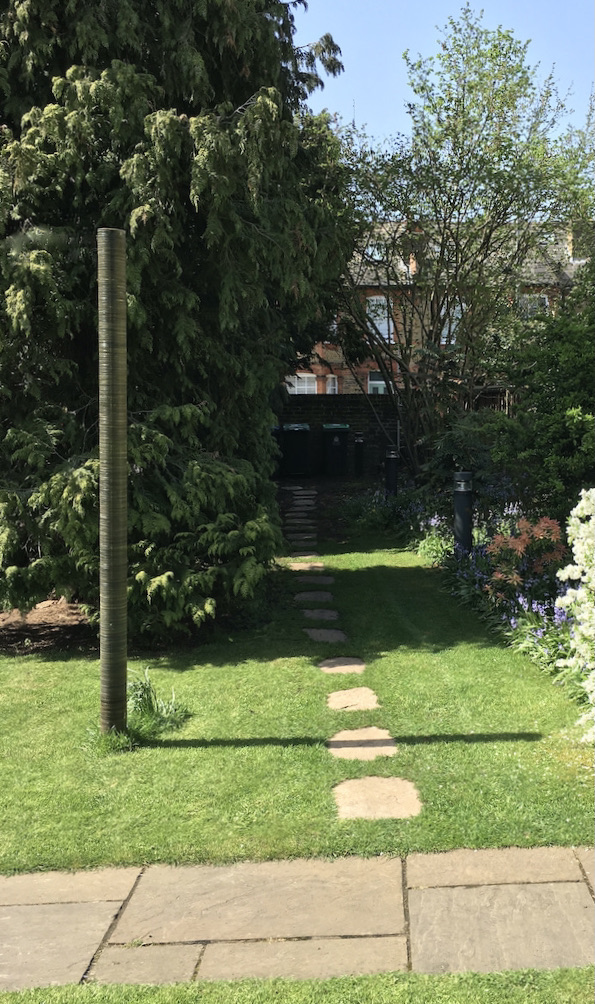
I’d noticed that although CDs were opaque, if you held them horizontally they actually allowed light to pass through. So I wondered how this would look with sunlight passing through hundreds of them. I decided to construct a towering, er, tower; a soaring column of translucent digital storage devices stretching upwards and upwards, higher and higher, until God himself could reach out, grab a disc and dial up the internet using Compuserve’s Fax Modem.
I got hold of hundreds more CDs via a cheeky request to the company that made those covermount CDs & DVDs for the publishing industry. I bought a stainless steel pole the diameter of which was a fraction smaller than the hole in a CD. I dug a hole in the garden and buried the bottom 300mm of the pole in concrete. Then it was simply a matter of threading the CDs over the pole until I reached the top.
You want a few facts, I can tell. So the number of CDs shown here is around 2,000. Their height is 2.5 metres and the weight excluding the pole is about 35 kilos. I noticed after a few months that the pole had become visible at the top, so I had to get the ladders out and add a few more CDs.
I had to repeat this action many times over the years. When I came to dismantle the tower some 15 years later, I discovered that the weight of the CDs had forced the ones at the bottom to sink over 100mm (that’s around 78 CDs) into the ground.
I did have some nice shots of the sun shining through the tower, but the external hard drive that hosted all my photos suddenly stopped working. I know, I know. I should have stored them on a DVD.
Anyway, during the course of those 18 years, my unique CD installation wasn’t:
Talked about on social media
Selected for a major arts award
Shown at the Saatchi Gallery
Viewed over 4 million times on Instagram
The subject of a Ted Talk about the fusion of art and technology
Popular with any of our potential house buyers
So in the light of this last one, I’ve reluctantly dismantled the tower. All the CDs went into landfill but the pole itself is proving to be harder to remove. I can’t lift the concrete out of the ground, and I don’t have anything like an angle grinder to cut through the metal. (The metal-cutting blade that came with my electric saw was next to useless.)
Today marks quite an anniversary in my life. It’s exactly 50 years since I moved from my native Bournemouth to start work in that there fancy London. Cor blimey, luv a duck, gawd bless ya. To mark the occasion, here’s a little (?) look at the places I’ve lived in since then.
But first, why the move from sunshine to smoke? It all came about following the final meeting between me and the laughably named ‘careers officer’ at my school. He’d finally given up on me and my stupid ideas about working in things like journalism (‘you’ll never make it, lad’) and acting (‘what I said earlier’), and in exasperation threw a big book across the table. It was called ‘Careers for School Leavers 1971’ and was basically an A to Z of companies. They were the lookout for young blood, or more likely they’d simply paid to be in the book.
Anyway, I took it home and showed it to my dad. He had a quick flick through and landed on the page showcasing Sir Robert McAlpine, the construction firm. “I’ve heard of them. They’re massive. Go and work for them.”
So I went for an interview and got offered a job as a materials buyer. (Ask me about nickel-plated twin thread 2″ No. 8 countersunk woodscrews. Go on.) I was also offered accommodation at a place called the Caledonian Christian Club, a hostel for young Scots working in London in the banking sector.
You have questions, I can tell. But the fact that I wasn’t Scottish, did not work in a bank and could hardly be called Christian didn’t seem to matter. McAlpines was a Scottish firm and that was as good a link as any. So on Sunday 1st August 1971 my parents deposited me at the hostel, an imposing Georgian building in Endsleigh Gardens WC1, and roared off back to the coast.
My first London residence, ya wee Sassenach bastart
My salary was £11 a week, which was crap even then. The equivalent today would be about £150. From that £11, I had to pay £4 a week for my room. Food was also included, and I remember some of it being edible. But my most abiding memory is of my fellow residents. I was one of perhaps three English guys in a community of around 70 expat Scots. Some delighted in telling me how superior Scotland was to England in every way. Some liked to swear in completely novel ways whereby sentences would be constructed almost entirely of swearwords, then one or two nouns and verbs would be inserted at strategic points to convey meaning.
A few had serious anger issues. One pulled a knife on me after I suggested that shouting at the manager of our local pub was perhaps not a wise move. I was with another when he split a man’s head open with a bottle of Newcastle Brown following some imagined slight in the nearby UCL student union bar. The area itself could be dodgy, too. Three big mainline stations were nearby, and on Saturdays the streets would fill with drunk football fans looking to have a pop at any strolling ‘cockneys’. I got attacked several times and learned a golden rule for surviving the big city: at the first sign of trouble, run like hell.
Go west, young man. Or even south-west
I’d like to say I forged strong and lasting friendships from the three or four years I spent at the Caledonian Christian Club, but I’d be lying. I couldn’t fucking wait to get away. When a school friend and his mate moved to London in 1974 and my salary had crept above starvation level, we got together and found a flat in Fulham.
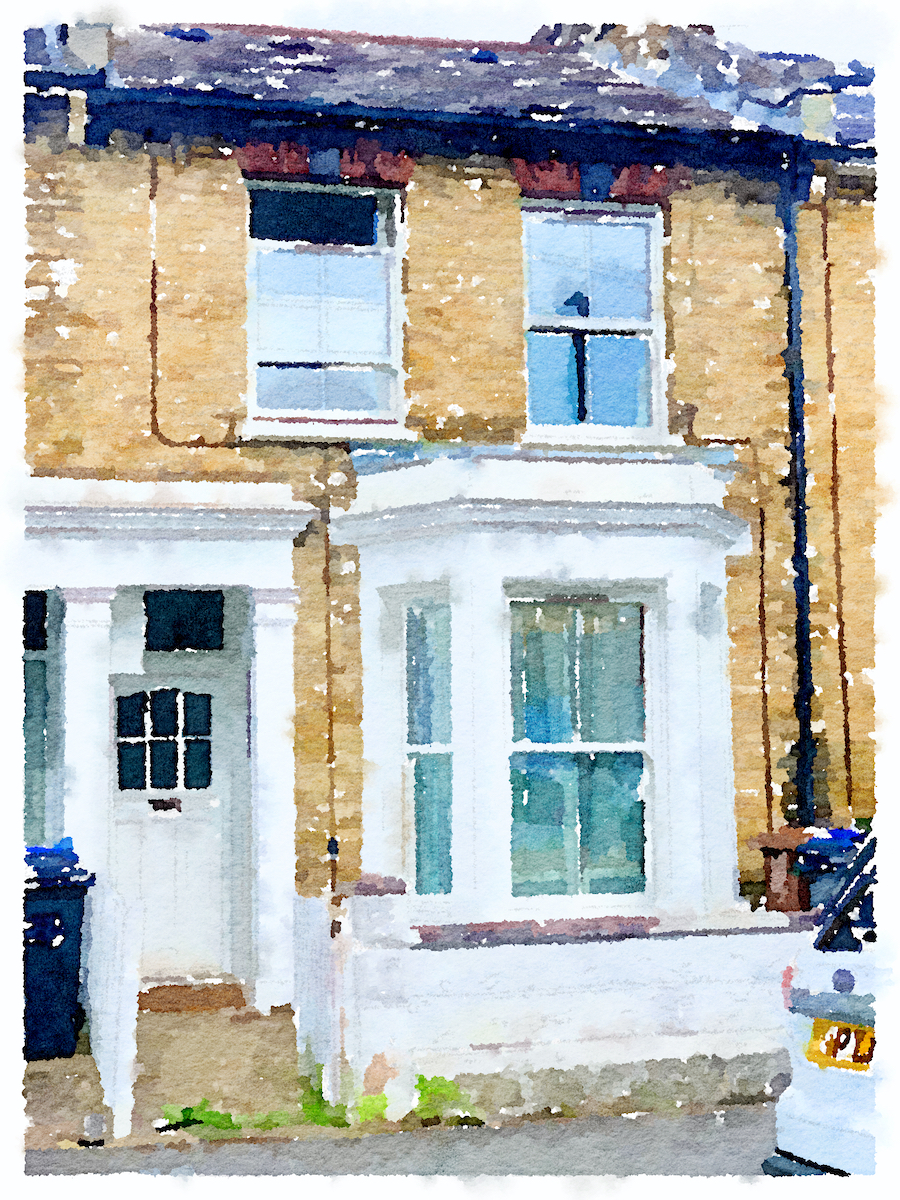
52 Stokenchurch Street, SW6
Fulham was still a fairly working-class area back then, as evidenced by the mass of black and white flags that appeared when Fulham made it to the final of the 1975 FA Cup. I would jokingly tell friends that I lived in ‘Fulham NEAR CHELSEA!’ to make it sound cooler. You’d even see the odd scrap-metal collector driving a Steptoe-style horse and cart. But the area was changing. Our neighbours constructing a sauna in their cellar was a sure sign that the area was becoming gentrified. These days it’s all Whole Foods, plantation blinds and SUVs.
My flatmates were called Mike and Ted. However, after a few months I learned that Ted’s real name was in fact Leslie. Confusingly, he had a brother also called Ted. They called each other Ted whenever they met. Then, shortly after finding out that flatmate Ted wasn’t called Ted at all, he told me that his brother Ted was actually called Simon. There were no Teds. Right.
A bush with the law
We had some memorable parties in Fulham. Prior to one, we thought it would be a good idea to decorate the flat with some greenery. So after a night girding our loins in the pub, we headed off to nearby Eelbrook Common and began hacking at shrubbery. However, someone called plod and before we knew it we were spending the rest of the night in a cell in Fulham Road nick. The police didn’t press charges, but I dined in on Special Branch jokes for years afterwards.
A bloke called Wayne lived up the road from us and started turning up unannounced and being a right pain. Wayne the pain. I think he was what nowadays we’d call ‘special needs’, but back then he was just the local loony. “Look,” he said to me one day. “I got meself a tattoo.” I glanced down and recoiled. His forearm was a mass of bloody welts and scars, with vaguely discernible blues and greens and blacks amongst all the weeping crimson. “Who the hell did this?” I asked. “I did it! Wiv me pens!” Reader, he’d impregnated his arm with ink from coloured biros.
Mind you, I wasn’t exactly Captain Sensible. Once, during some sort of drunken game, I somehow managed to push my hand through the glass of the front door. I was bleeding copiously from the underside of my wrist so we quickly asked a car-owning neighbour to rush me to St Stephen’s Hospital. They couldn’t stitch it because of the position of the wounds, but the good news was I hadn’t severed an artery. Obviously. I still have the scars underneath my watch strap, and to this day have an aversion to thrusting any part of my body through plate glass.
Earls Court out
During the Fulham years I got several bar jobs, including one at a long-gone pub called the Lord Ranelagh in Earls Court. Earls Court being famously gay I shouldn’t have been surprised one night when a young Asian guy sauntered to the bar and said “I want cock.”
I was happy to redirect.”You want the Coleherne up the road, mate.”
He pointed to the back of the bar. “No. That cock. Cock a cola.”
I quickly made friends with the fellow bar staff and the pub’s resident DJ. They were fun and friendly people who didn’t call themselves Ted. A few of them rented a house in Wimbledon and when a room there became free, I moved in.
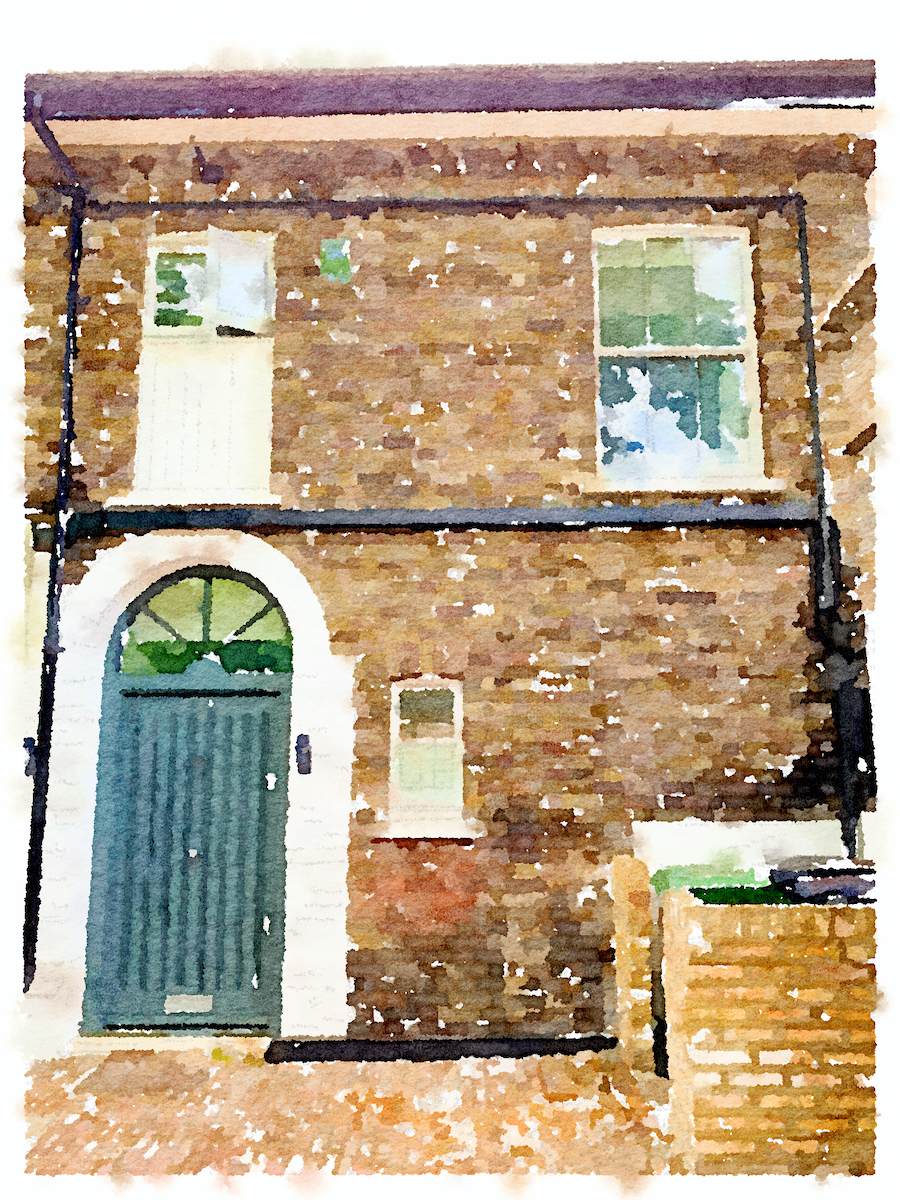
48 Gladstone Road, SW19
I still see the people I met here in 1977. All except for Jim. Jim was a transient South African – not nearly transient enough – who inhabited a strange kind of smoke-filled box room halfway up the stairs. He was everyone’s idea of the world’s worst flatmate. Never washed anything up, never even washed himself, and if you ever implored him to at least keep his door closed so that the rats didn’t make forays into the rest of the house, he wouldn’t understand you as he was perpetually stoned out of his mind.
Altogether more refreshing company was Sue, who I met through a Wimbledon flatmate. Even when she wasn’t dancing on pub tables or belting out Gary Numan songs on the underground, she was brilliant to be with. We had a lot in common, but although I was partnerless and keen, Sue was hooked up with a doctor and was all settled in a flat in Lewisham. So I was more than surprised one day when Sue called and said that she and I should drop everything, leave England and go live on a kibbutz. Surprised and stumped – what the hell was a kibbutz?
She explained. I listened. I asked about the boyfriend. He’s history, she said. I thought he was medicine? Boom! Anyway, I quit my job (by then I was working for a company that made oil drums), sold loads of my stuff to raise funds, relinquished my room in the Wimbledon house and bought a one-way ticket to Tel Aviv.
ThatGod and his mysterious ways
A week before we’re due to fly out, Sue rings and says that she’s no longer coming. Why ever not, I asked, and You Won’t Believe What Happened Next.
“I’m sorry. But I’ve found God, and believe my life will be better spent here, teaching the words of our Lord and Saviour Jesus Christ.”
I know! I probably said much the same thing then as you’re thinking now. But the die was cast, I’d booked the flight and was soon to be jobless and homeless. So off I went to the Promised Land, there to enjoy a drink and drug-fuelled orgy of hedonism and debauchery, sometimes involving other people.
The old Sue would have fitted right in. The new Sue would have absolutely hated it.
My kibbutz experience and the subsequent jobs I had in the Netherlands have no place in this blog, which is primarily about the various London places I’ve lived in during the last half-century. So let’s miss out a year or so and pick up the story in 1980. I was back from my travels, a bit wiser, not at all wealthier but with a rich fund of anecdotes about chickens and bananas. Oh yes.
Initially, I shared a huge house in soulless Brondesbury Park with some ex-kibbutzniks and a bunch of Aussies, but that didn’t work out. (Turns out not all Australians are chipper, easy-going souls.) So I briefly returned to Bournemouth for a factory reset. I did a few manual jobs, including a stint working the spots at the Winter Gardens. It was here that I told a briefly speechless Michael Barrymore that there was not a soul alive who could convincingly whistle the theme tune to Panorama. The rest is history.
A fresh start
What to do with my life next? All I knew was, I didn’t want to go back to some boring office job. I wanted an exciting office job. So my mate Adam helped wangle me a role as a copywriter at a direct marketing agency in Bayswater (‘what is it I have to do again?’) And for the first month or thereabouts, he let me stay in the spare room of his and his wife’s house in Bounds Green.
It wasn’t ideal. Well, if you like living with super people who share your taste in music, comedy and leisure pursuits, it was the very definition of ideal. But I ask you. Bounds Green. See, the thing about north of the river is, there’s bloody miles of it to get through before you’re actually in north London. But to get to south London you simply step across a bridge and bang, you’re in it.
Tewkesbury Terrace, N11
Until something better came along and not wishing to outstay my welcome, I decamped to a flat near Turnpike Lane. There were no recreational temptations here. Just me, the studiously quiet owner and a ticking clock. Every waking moment was like a never-ending wet Sunday afternoon in the 1950s. But when she announced she was hosting a party, I perked up. I volunteered to go to the off-license to buy some wine and beer. It was clear from her reaction that the thought hadn’t occurred to her. “Oh yes, wine and beer. Maybe some of the guests will enjoy that!” Whaaat? I bought as much as I could carry and, in the event, quite possibly consumed the lot.
The only thing of note to happen during my mercifully brief stay here occurred during a trip to the local launderette. It’s funnier than it sounds, but only marginally.
Frobisher Road, N8
Salvation came in the form of a call from my old friend Mike, who’d fetched up in a mews flat in Clapham. There was a room there if I wanted it. I think I might have moved in before he’d put the phone down.
Cedars Mews featured a colourful and ever-changing roster of inhabitants. There was the needlessly tall Hugo, who once landed a summer job touring the country on a flatbed truck pretending to be Darth Vader. Mild-mannered James, the rural vicar’s son, who got himself arrested for mooning at a policeman as he rode past on his moped. I remember a waitress, a nurse, a film-maker, a bicycle courier, a shop assistant, an architect… The nights were long, the parties frequent, and the shopping kitty a bugger to resolve.
Cedars Mews, SW4.
For reasons lost in the mists of time, we rented the adjacent garage to a famous photographer. He operated from a seven-storey apartment in Clapham Mansions, a grand old block of flats situated between us and the Common, and was in the midst of having a huge swimming pool dug out in his back garden. The noise was deafening. Anyway, he came round one afternoon to pay the following years’ rent for the garage. It was obvious he resented having to pay money to us mere flat-dwellers and was arrogant and rude. We got our own back in an unforeseen way when a letter arrived from the council asking if we had any objections to a neighbour of ours conducting a commercial business in a residential property. ‘None at all’, we replied. ‘We assume they have the necessary permission, just as we assume the people in Clapham Mansions will have sought and gained official approval for the large covered swimming pool currently under construction to the rear of their property.’
That did the trick. Work suddenly halted and the site remained silent for months, presumably while he got retrospective planning permission. Ha! Mind you, he sold the place in 2012 for £3.5 million so it’s conceivable he got the last laugh.
I meet my destiny
The most significant event of my time in SW4 occurred not in the flat but in the Windmill, the huge Youngs pub in the middle of Clapham Common. It was here that I first set eyes on Carol, who was later to become my wife. We spent increasing amounts of time in each other’s flats so eventually decided to buy our own. We found one in a freshly converted cotton-reel factory, situated one stop down the Northern Line in Clapham South.
9 Anchor Mews, SW12
Here is where I started to become a proper grown-up. Parties became dinner parties, the food kitty became a joint account and I found myself starting to use words like ‘flatpack’, ‘satinwood’ and ‘personal pension’.
The next move up the property ladder saw another move down the Northern Line to Balham, Gateway to the South. (In 1988, almost everyone came out with that quote when you said you lived in Balham.) We spent almost 10 years at our Victorian semi in Fernlea Road, a time that saw Carol and I get married and bring two unsuspecting young people into the world, Georgia in 1990 and Sarah in 1992.
110 Fernlea Road SW12
We built some brilliant memories in Balham. (Although it was strange how, like Clapham South before it, the area seemed to become cool and trendy within weeks of us actually leaving it. It was like the Urban Gentrification Crew were waiting around the corner, saw our removal lorry trundle off into the distance and say ‘Alright lads, they’ve gone! Make with the wine bar and artisanal bakery conversion kits!’)
I exaggerate, of course. Balham was great. I even managed to persuade fellow Balhamite Arthur Smith to do a turn at my 40th birthday bash, held upstairs at the Bedford Arms. But towards the end of the 90s we were thinking about schools for our girls and more space for ourselves and our dog Echo, so in April 1997 headed off to New Malden.
Our home in New Malden
We immediately hit it off with our neighbours when they popped round to introduce themselves and ask if we’d sign their petition. I asked them what it was about.
“They’re planning to open a pub in the high street!”
“That sounds good, where do I sign?”
“No no no, this is AGAINST the opening of a pub!”
Welcome to New Malden, people.
Although the ‘burb itself can feel decidedly parochial, it’s dead handy for nicer places. There’s Richmond Park, Home Park, the River Thames and all that Wimbledon and Kingston have to offer. We love our house, too. We discovered that a not-very-famous painter called John Sargent Noble once lived in it and that its cellar served as an air-raid shelter during the war. The biggest threat we faced was when a burglar broke into the adjoining house one Christmas Day at 2.00am and lit fires everywhere in an attempt to destroy his DNA (nice try, George). Although the occupants lost everything, our home was undamaged and we all emerged unscathed.
That brings us all up to date. We’ve lived here for almost 25 of the last 50 years and our memories of the place are overwhelmingly positive. But we can’t spend the rest of our lives in New Malden. I mean, come on. So where to next, hmm? Any suggestions warmly welcomed…
Who was that by? The Pet Shop Boys, wasn’t it? Or was there an earlier version? Fastrack would have told me. Fastrack was an outfit that sold CDs by post. (Straight away you can tell that I’m going back to olden times, here.) You rang them up, said the name of the song or the album, and they’d send it to you for less than you’d pay in Our Price or Tower Records. The important thing, and what distinguished them from other CDs-by-post people, was that Fastrack wasn’t a music club.
“So they don’t want the ads to look like ads from a music club, like Britannia.” This was the account man at an agency I was working for at the time, briefing me and the art director. “It’s not a club, you’re not a member, there’s no subscription and no commitment.”
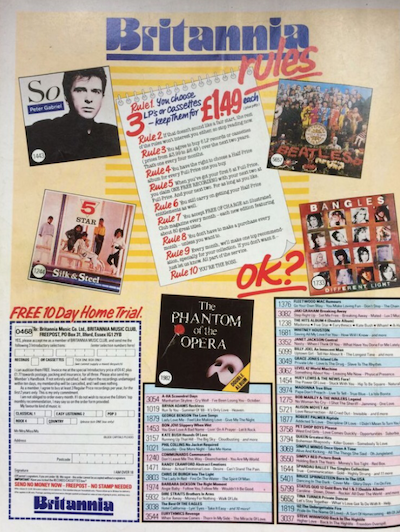
“You sound like the ad!” I might have said. But he was right to make the distinction. Britannia’s ads were a staple of the printed press throughout the 70s and 80s. The music-club business model was to lure you in with a seemingly great offer, then trap you into receiving four or five CDs or videos a month at pretty much shop-bought prices. You had to send them back if you didn’t like them. Something like that, anyway. Britannia was aimed at people who liked collecting stuff rather than those who actually liked music.
A Britannia ad from 1986
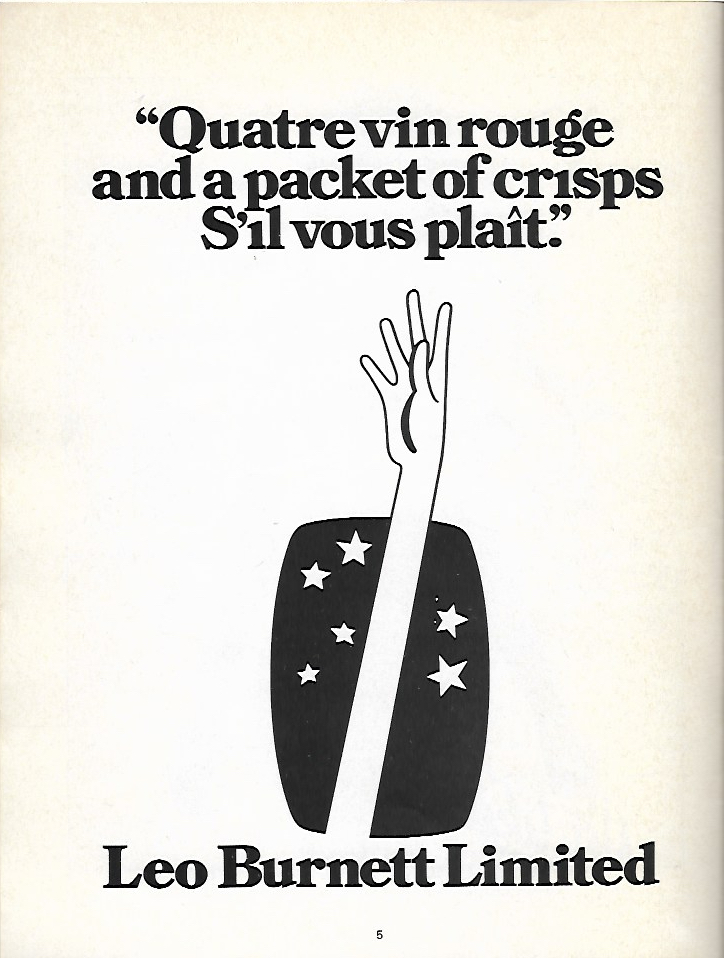
The ads the art director and I came up with looked very different. No lists, no album covers selected to appeal to the biggest demographic, and definitely no coupon. One of our headlines was ‘From Abba to Zappa’ (a line that would be used by the Observer for their monthly music magazine some 15 years later). We were showing it to the agency’s MD and he shook his head. “I like it, but we can’t present it,” he said. “Why not?” I asked, not unreasonably. “Well, what if someone wants an album by the Zombies? They’ll think Fastrack can’t get it.” He was serious. At this point, you’d expect the creative director to step in and deliver an almighty slap, but he was off doing something else. So that ad never appeared. Neither did the one we came up with in response to the weirdest media brief I’ve ever encountered. The ad would be about the size of those cards you get in a newsagent’s window, except that in this case the newsagent was an army barracks and the window was a notice board in the servicemen’s canteen. The strategy was sound: squaddies can’t easily get off base to buy the latest CDs, so here’s a way the CDs can come to them.
My headline?
The MD looked at the headline for what I felt was an inordinately long time. Like, longer than the quarter-second needed to read and understand it. “Incoming? You mean, like a message or something?” “Not a message, no,” I said, and virtually shouted the word whilst looking terrified at the office ceiling. Then I looked back at him. “Not with you,” he said. “Does it mean something?” “Yes! It’s what people in the army shout to each other when they’re about to be attacked by mortars or bombs or whatever. INCOMING! Like that. But in our context, it also means that their favourite CDs will be incoming, or coming in, to their base.” Fuck me, I was patient.
“Nope,” he says finally, “I don’t think anyone will get it.”
I still think it was good and, yes, I still remain bitter. ‘You were always on my mind,’ I say to myself. So what ads DID run? In the end, the MD overruled me, the art director, the creative director and everyone else, and declared that the agency should present ads that look exactly like music-club ads ‘because obviously they work.’
Despite my best efforts as a customer – I used to know their number off by heart – nobody ever heard of Fastrack again.
Do you have much technology around your home? Probably. And do you find that it all works reliably, consistently and seamlessly? Probably not. Hopefully not, in fact. Because I’m reluctant to concede the idea that it’s just us who suffer almost daily occurrences of unreliability, inconsistency and seamlesslessness.
Here’s the set-up: An Amazon Echo and two Sonos speakers in the kitchen, an Alexa-enabled Sonos One in the bedroom and a few other Sonos speakers dotted here and there. A couple of TVs and Wi-Fi courtesy of Virgin Media.
For a while, everything worked as it should. Usually, anyway. At bedtime, we’d set the speaker in the bedroom to play the Alexa sleep sound ‘Rain On A Tent’ for 30 minutes, and neither of us would ever be awake to hear it end. (Trouble nodding off? Give it a try.)
In the morning, we’d ask Alexa to play Radio 4 or Radio Paradise (an ad-free station that plays non-challenging music of a certain vintage) and Alexa would happily oblige. Meanwhile, true to its raison d’etre, Sonos would stream music from Spotify in whichever room we wanted. We could watch Netflix, Amazon Prime, BBC iPlayer…
All was well, techno-wise. But gradually things started to go awry. Not hugely, as in total system failure. But in niggling, inexplicable ways. (I’ve compressed the timeline. This all happened – and is still happening – over a period of months.)
“Alexa, what’s got into you?”
A request for Alexa to play ‘rain on a tent’ meets with ‘Sorry, I don’t know that one.’ I change the wording, making it explicit that I want the Alexa sleep sound. Same response. Luckily, there’s a phone app called RainRain that does much the same thing, although the sound quality obviously isn’t so good.
But then, a few months later, Alexa somehow rediscovers sleep sounds. Hurrah! We climb into bed and are soon fast asleep. Some hours later, I awake for a pee and find that rain on a tent is still playing. That’s weird – I’d set the timer for 30 minutes. ‘Alexa, stop.’ Alexa briefly pauses, then resumes. ‘Alexa, stop playing rain on a tent.’ Same thing happens. I physically turn it off, but Alexa immediately springs back into life with more rain. Eventually I have to unplug it and hope it doesn’t somehow re-energise, Christine-style.
In the morning, we plug Alexa back in and ask it to play BBC Radio 4. ‘Here’s BBC Radio 4,’ she confirms. But then – silence. ‘Alexa, play, er, Tom Waits.’ Nothing.
Downstairs, we ask kitchen Alexa to play Radio Paradise. She’s never had a problem doing this before, but now there’s just radio silence or ‘I’m sorry, I can’t find that one.’ I go online to try and sort things out. Some people say I have to disable the Sonos skill, then re-enable it. How that will help Alexa find a radio station? And what’s it got to do with Sonos anyway? But I go ahead and do it. The results are not what I expect.
Kitchen Alexa will now play Radio Paradise (RP), but has elected to play it through various Sonos speakers rather than via the Echo unit itself. This means we can’t control the volume using the handy buttons on Alexa, only via imprecise voice controls. Even more strangely, it’ll play the same four songs on a constant loop, with none of the normal station idents (Hippy Californian voice: ‘You’re listening to Radio Paradise daht cahm’).
Meanwhile, bedroom Alexa says it WILL play RP, then a week or so later decides I’ve listened to it enough and refuses to play it anymore. FFS. I give it a few days and try again and, guess what, Alexa has evidently decided that RP is okay for us to listen to after all. But there’s a catch. We can only listen to one song. Which she plays again and again to the point of audio torture.
Call that a password?
During one of my numerous attempts to get to the bottom of all this, I notice my iPhone is saying that our Wi-Fi security is weak. What new hell is this? I google the warning and discover that this is possibly the worst thing in the world, that passers-by will be emptying my bank accounts and ordering superyachts. But then others say it’s nothing at all to worry about at all; just Apple being over-cautious. To be on the safe side, I set about reconfiguring the Virgin router. I enter the password and am told that it isn’t strong enough. Well possibly, I think, but that’s the one we agreed on three years ago, so let me in because I’ve got some serious reconfiguring to do. Nope. I can’t use my previously acceptable password until I’ve changed it to a much stronger and of course far less memorable one. So I change it. Now of course we have to update Netflix, iPlayer and Amazon Prime on two TVs. This is where my day goes.
(The irony here is that the TV is supposed to get its WiFi signal from our Tenda mesh system, which has a different password altogether. I AM SO CONFUSED.)
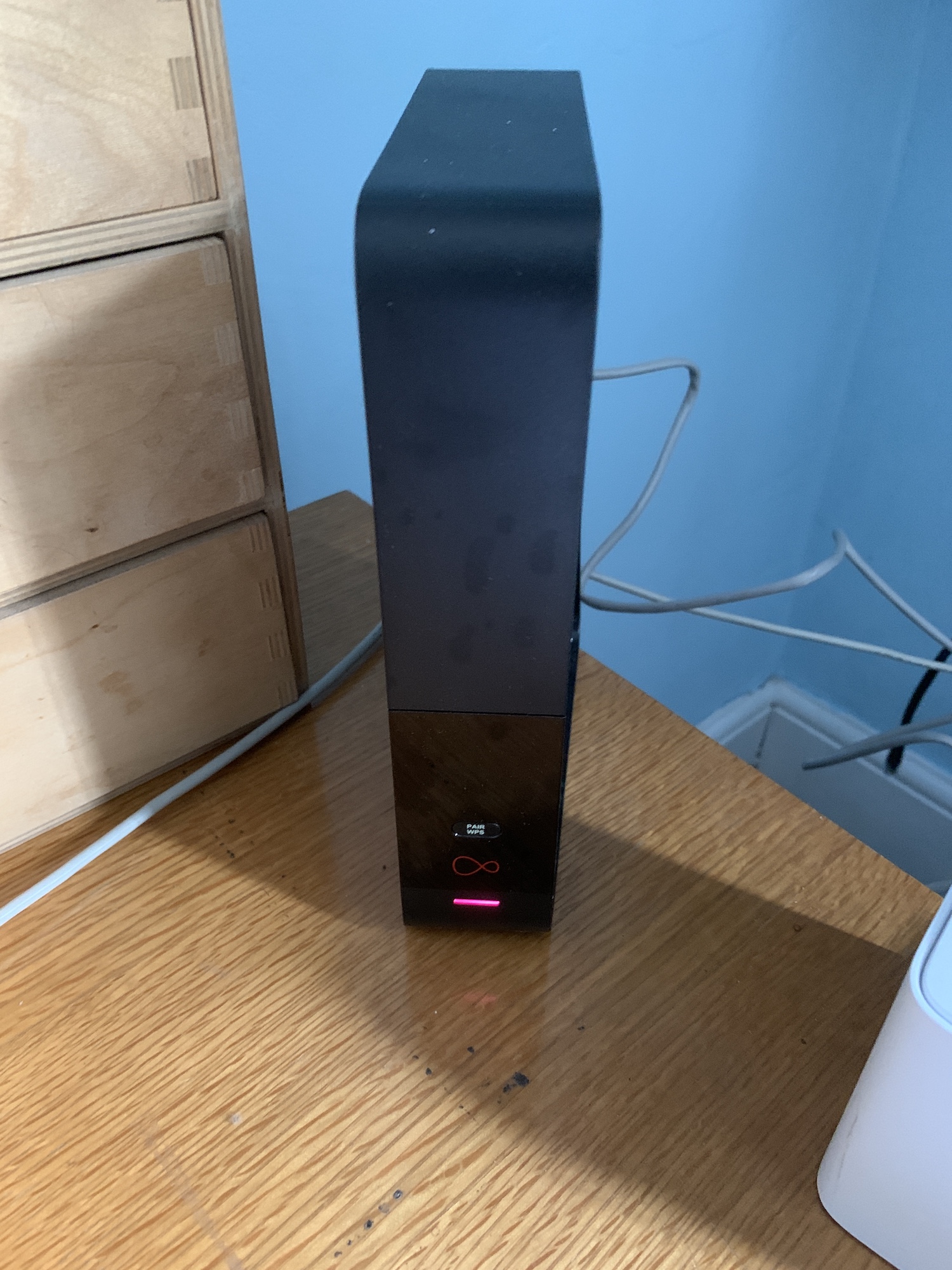
Anyway, can I reconfigure the router? Can I heck. I don’t have the skills or the patience. But I do notice that the little white light on our router is suddenly glowing red.
Danger, Will Robinson!
This could be bad – red is the international colour of imminent threat. I ask @VirginHelp for help. They ignore me. On Virgin’s website I learn that the reason it’s red is because the router is overheating.
Ignoring the fact that we’re in England in October, that the router isn’t perched on a radiator or been covered with a cloth and that we haven’t lit a small fire next to it, I nevertheless do what’s suggested and TIOATIOA. 15 minutes later it reboots with the same red light.
So I call Virgin and, after 30 minutes, get through to someone in Bangalore. “It means it’s overheating,” they say. “Turn it off and turn it on again.” I explain that I have already done this, that it’s not hot where we live, and that there are no nearby fires etc. “It’s nothing to worry about,” they say. “Just leave it.” But a red light signals danger, I say. The light should be white.
“Well, if you don’t like looking at it, says the Virgin expert, “cover it up with a cloth.”
When the country went into lockdown I started growing my hair. Now, some eight months later, I’m just about ready to tear it out.
Postscript: In preparing this blog post, I tried to AirDrop the photos from iPhone to Mac. It always used to work easily. But now, suddenly and you could say inevitably … it doesn’t.
Postscript #2: Something else to get my head around. WordPress has suddenly changed the way blog posts are created. Everything is different, and it won’t let me add captions to photos.
















































 BraveNewMalden