Category Archives: Stuff

A rubbish idea?

Driving down the M1 recently I saw the following message on one of those giant dot matrix signs:

BIN YOUR RUBBISH
OTHER PEOPLE DO

Having precious little else to do, I thought about that for a while. The wording of it. (Not, for once, the punctuation or clumsiness of the language.) Normally, an anti-littering message will be along the lines of PLEASE TAKE YOUR LITTER HOME WITH YOU or simply NO LITTERING. This particular sign appeared to be using basic psychology to persuade people not to chuck litter out of their windows. Perhaps it was an example of the nudge theory we’ve been hearing about.

Will it work, though? Would the thought that you’re in a shameful minority encourage you not to litter? On the one hand, we like to belong and to conform to certain behaviours. On the other, some of us are utter twats and will remain that way no matter what we read on road signs.

Blogger Pete Faint is strongly of the opinion that the signs won’t work. But I’m hoping they have a positive effect, because the motorway and A-road verges that I’ve looked at during traffic delays are in a terrible state. It’s not all the fault of drivers. Lots of ripped plastic sheeting seems to have ended up on roadsides from nearby farms. Crop farmers use huge quantities of the stuff to wrap their bales of hay or corn or whatever, and some of it gets blown away to festoon trees and hedgerows for miles around. But mostly it’s fast food packaging, magazines, sweet wrappers and drinks bottles, right up to bigger stuff like furniture and pallets. Plus puppies in sacks.

In any case, how would anyone know if it’s worked or not? We’d only know if they did a split test. Signs would go up along one motorway that’s just been cleared of all litter and along another one that hasn’t. After a year, you look at the results. Instinct tells me that the Highways Agency doesn’t think like that, though. I could be wrong. Incidentally, this guy had a novel approach.

The ‘litter creates jobs’ argument

I was coming home on the Tube with a colleague once when I noticed him drop his copy of Metro on the floor of the carriage. I pointed out that he’d dropped it, and he responded that it was OK, he’d finished reading it. I tried to convince him that he was littering, but his opinion was that dropping Metros was acceptable because “they have people at the end of the line who are paid to pick them up.” He must have thought I’d find this difficult to believe because he added  “I know because I’ve seen them.”

It almost sounded like he’d made some sort of point. Without all those Metros to pick up (along with all the paid-for newspapers that are now being left behind on public transport, since the coming of Metro has conferred legitimacy on the dropping of just about anything), the newspaper picker-uppers wouldn’t have a job to do. Well, not THAT job. But using that argument, it would surely be better from an employment perspective if we were all to commit more crimes (extra police and judiciary) and cause more collisions (extra jobs in manufacturing, insurance and auto repair).

The other point to bear in mind, and I think it’s a valid one, is that I hate Metro. Especially its laughable claim to be ‘apolitical’.

Anyway, what do you think? About the motorway signs? Think they might stand a chance? I’m itching to hear your opinion.

10 Comments

Filed under Modern life is rubbish, Stuff

2011 in review

The WordPress.com stats helper monkeys prepared a 2011 annual report for this blog.

Here’s an excerpt:

A New York City subway train holds 1,200 people. This blog was viewed about 4,500 times in 2011. If it were a NYC subway train, it would take about 4 trips to carry that many people.

Click here to see the complete report.

Leave a comment

Filed under Stuff

This is one weird way to buy a phone

A 'carphone' 'warehouse'.

My iPhone 3G has been getting very slow recently. It has to think about every action, much like a sluggish PC. Installing the latest operating system didn’t help. In fact I think that was a ruse by Apple to get all iPhone 3 users to upgrade to the latest model. And it worked. That’s why, a few weeks ago,  I found myself stepping into the local Carphone Warehouse.

The last time I was there was to buy my current iPhone and to switch networks from T-Mobile to O2. I remember the process being very quick and simple, leaving the store after around an hour clutching my new phone. The phone was great, the network less so. From Canary Wharf to Soho to Clapham Junction, there seemed to be vast swathes of London where the signal was weak or intermittent and where the 3G network may as well not have existed.

Hopefully, the combination of a new phone and a new network would provide me with the service I sort of expect for £35 a month.

It didn’t start well. Vodafone wanted to see various documents so that they could carry out a credit check. I had my driver’s licence and credit cards and business cards, but they were never going to be enough. The Carphone Warehouse sales guy said I’d need to bring in a bank statement or utility bill. For reasons of expediency,  I could email them.

So I went home, scanned in my driver’s licence and a bank statement and emailed them to the guy at the address he’d given me. The following weekend I returned to the store, looking forward to start playing with my new phone. You know what’s coming, don’t you?

“Vodafone have mislaid the documents I sent,” said the assistant. Apparently he’d received my email, printed the attachments, faxed them to Vodafone who’d promptly lost them. (I’m writing this in 2011, by the way, just in case seeing the word ‘fax’ makes you think that this is a blog from 1998.)

Thing is, I don’t think that straight when I’m cross. Otherwise I’d have asked him why he didn’t email the documents himself. Why he’d used a fax machine. Why, when he learned they’d gone missing, he didn’t simply send them again. Why he didn’t warn me against making a futile trip back to the shop. And why he gave me his hotmail address rather than a ‘guy@carphonewarehouse’ email address.

Instead, I made noises about hoping to get a better deal on the rental or the upfront cost as some sort of recompense for all the inconvenience I’d endured, and said I’d return the following week. My third visit.

This time, I rang the store before making the schlepp into Kingston. Just to be certain. That was the idea, anyway. In the event it was an utterly pointless precaution as I never managed to get through. My call was important to them, a recorded announcement kept assuring me, though clearly not so important that it would actually be answered. So I got on my bike and headed into K-town.

The store was surprisingly devoid of customers. The staff were milling about, chatting to one another. No sign of my guy. The manager was there, though, and he told me that the person I’d been dealing with had the day off.

“Perhaps you can help me, then.”

“Well, no, not really,” explained the manager. “You’ve been dealing with him. I don’t know anything about it. You’ll have to come back tomorrow.”

“Tomorrow? Actually, I think ‘never’ works better for me.”

I must admit there was a swear before I walked out of the shop. But like I say, there were hardly any customers there to be offended.

So there we have it. A company engaged in the business of communications not answering phone calls. Not liaising with one another. Using fax machines. Encouraging their staff to give out personal email addresses. And one of Britain’s largest companies asking for private data to be transmitted via one of the most public platforms in existence.

I’ve packed letters off to both companies saying that they will be held jointly responsible if I become a victim of identity theft and I’ve also alerted the Information Commissioner’s Office. I’ve written this ranty blog. But I still don’t have a new phone, and now I’m not sure what to do  next.

6 Comments

Filed under Anecdotage, Modern life is rubbish, Stuff

Bobby’s drawers

Had he not died, David Ogilvy would probably be the only person to have worked at Ogilvy & Mather longer than Bobby Norris. Originally an art director, Bobby worked with everyone from Fay Weldon to Tony Hancock and whose throwaway lunchtime comment provided the strapline for the long-lasting ‘Unzip a Banana’ campaign.  He should have retired years ago but Bobby, 75, insists on turning up for work two or three days a week in Ogilvy’s Redworks studio. And his colleagues should be grateful that he does, because Bobby is the agency’s unofficial quartermaster.

Say “Got a stapler, Bobby?” and Bobby’s likely to respond with “Standard, electric, long reach or booklet?”*

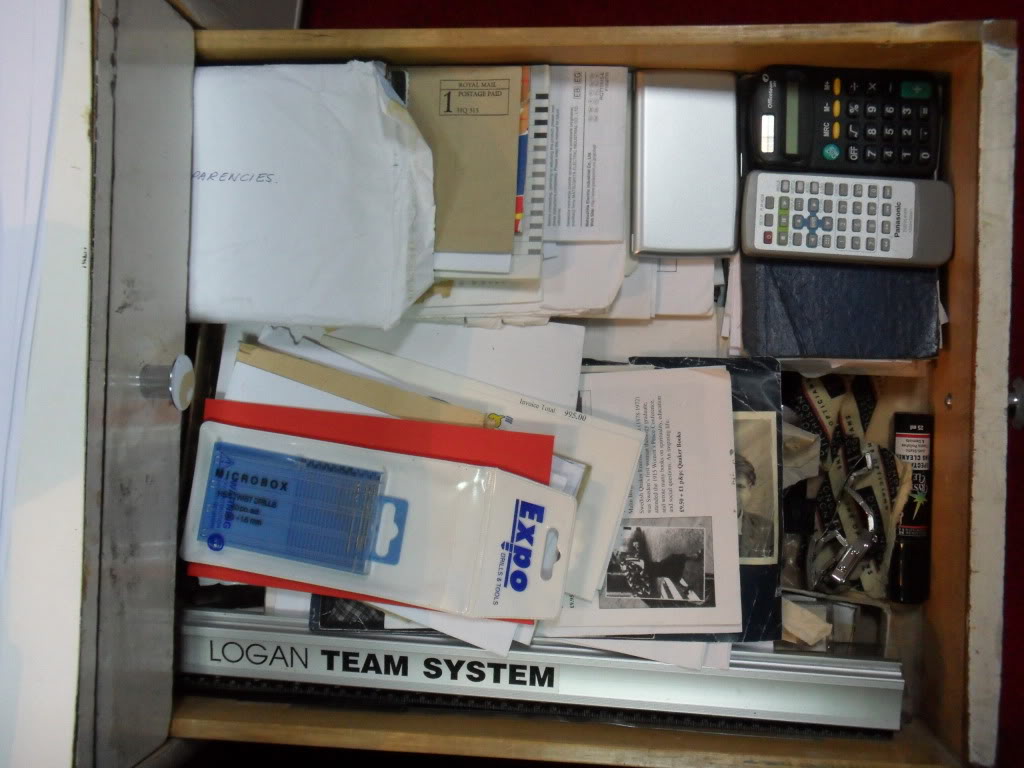
Here’s a look at what’s in Bobby’s drawers:

Robbie’s top drawer

Robbie’s middle drawer

Robbie’s bottom drawer

And here’s a look at what’s inside a freelancer’s drawer:

* No skin staplers, though. If you’re undertaking a bowel resection during colorectal surgery, you’ll have to look elsewhere.

Edit: Bobby Norris died in 2014. Campaign magazine carried a brief obituary.

Leave a comment

Filed under Stuff

Sort-of integrated campaigns

Have you seen this ad recently? You probably have. It’s everywhere right now. In the press and on 6-sheet and cross-track posters. Maybe other places too. In the ads, a woman or occasionally a man has been handed a parking ticket from a traffic warden. But instead of being cross about it, the motorist is happy. The traffic warden looks happy, too. Everyone’s happy.

In another execution, the happy motorist is shown with the ticket in one hand and talking into a phone that’s held in her other hand. There are smiles all round.

The phone bit made some sort of sense, in as much as it was an ad for a phone company. An ad for a phone company featuring someone using a phone wouldn’t be a bolt from the blue; a crazy juxtaposition making all your cognitives go into dissonance overload.

But it didn’t help me make any more sense out of the overall concept. And in any case, what could she be saying into the phone?

“You’ll never guess what happened, Mum! I got a parking ticket! Yes, another one! Well, they say good things happen in threes!”

According to the headline, there are ‘no nasty surprises with You Fix’. Did that make things clearer for me? A bit, maybe. Perhaps the motorists haven’t really been given tickets. Perhaps, in some inverted adland version of reality, the motorists are actually giving parking tickets to the traffic wardens. Fuck knows. Despite the posters and ads being all over the place, I soon decided not to bother trying to decipher them. It’s probably to do with some clever network joke that people in my demographic wouldn’t get.

I mentioned this to a friend the other day and he told me what the campaign’s all about. Apparently,it’s based around a TV commercial in which an actor dressed as a traffic warden gives fake parking tickets to other actors dressed as motorists. The drivers pretend to be upset, then pretend to be overjoyed when the ‘parking ticket’ turns out to be a £10 note. No nasty surprises. See?

It’s quite a good idea, if a tad derivative (although lifting stuff is officially Not A Crime Any More in advertising). Showing the absence of something is always a tricky brief to crack.

No, it’s not the idea that irks me about this, or the creative strategy. It’s the assumption that everyone who sees the posters or print ads will have seen the TV ad and will thus get the joke.

Doesn’t that strike you as odd? Not everyone watches Emmerdale or X-Factor. To make doing so a precondition of understanding your ad campaign seems, well, a bit wasteful.

It’s not a one-off, either. I was recording a radio commercial recently and questioned whether the call to action – which involved people texting a certain word to a particular number – was being said with enough clarity by the voiceover. The client, who shall remain nameless, said it wouldn’t matter if some people couldn’t hear it. They’d probably be able to read it on one of the posters.

6 Comments

Filed under Ill-informed advertising observations, Stuff

A reflection on service, PC World style

I found myself watching an old sketch from Monty Python’s Flying Circus on YouTube the other day. Like a lot of Python’s work, the burglary sketch hasn’t dated particularly well, particularly for those sophisticated consumers who like their comedy edgy, dark and cruel.

But I have simple tastes and sometimes silly voices does it for me humour wise.

Although routinely described as zany, madcap and surreal at the time of its original transmission, it’s possible to detect a clear satirical streak in much of the Python’s work. The target? Basically, anyone the British public was forced to deal with in order to live their lives.

The gas man sketch was typical (while also being a barbed comment on union demarcation in the 60s and 70s), but the cheese shop sketch, buying a bed, the argument clinic and not least the dead parrot sketch were all riffs on the appalling service Britons endured as part of their day-to-day lives.

Since then, of course, British companies, utilities and local authorities have discovered the value of service. A great number of them proclaim themselves to be ‘customer centric’ organisations.

‘We put the needs of the customer at the forefront of everything we do’, they say. They have conferences about improving and enhancing their ‘service offering’, and run intensive courses for their staff aimed at discouraging them from treating customers with thinly-veiled contempt.

The manager at my local PC World was absent on the day of the course, or slept through it. She missed the conference, too, and never got to read the mission statement.

Part of my mission statement reads ‘try and avoid places like PC World’, but on this occasion I had no choice. I’d just bought £60 worth of kit and paid by card when I remembered that the pay station in the car park where I’d left the car wouldn’t accept £20 notes. So I asked the sales assistant if she could change a £20 note for me. She asked me to repeat the question. So I did, this time holding the note for her to see it.

I dd this so that she wouldn’t think I was the kind of weirdo who asks for change but doesn’t come equipped with the appropriate currency. Maybe such weirdos exist; I don’t know. But I also did it because I reasoned that the combination of the repeated question together with visual stimulii would enable her to understand the meaning of what I was saying, and thus formulate a response. It works with children.

“I don’t know, I’ll have to get the manageress.”

Oh. And off she went. Manageress, eh? Not that much of a PC world, then.

The assistant said a few words to an older lady who looked up, then turned to look directly at me. She walked over without acknowledging or saying anything to the shop assistant, who stood back and watched.

“Yes?”

No “Hi, how can I help?” or “Sorry, what was it you were after?” Not even a smile. Just deep suspicion, tinged no doubt with resentment that a customer had interrupted whatever it was that she was doing.

This time I explained why I wanted the change. Perhaps the implication that I’d been supporting the local economy would help my cause. I held up the banknote, then showed that I was a bona fide customer by also displaying my purchase. But somehow I knew what the answer would be.

“No, I can’t do that.”

“I don’t understand, is it technically difficult?”

“It’s not difficult to do it”, she said. “I just won’t.”

And that was that. What I should have done, of course, was get an immediate refund. Perhaps demand the refund in £10 notes. What I wanted to do was slap her, quite hard, across the face. But then I’d have had to contend with the fit-looking security guard – sorry, guardess – stationed at the door.

So instead I started mentally drafting this blog and anticipating the relish of knowing that it would be read by over a billion people.*


*Actual figure may vary.

10 Comments

Filed under Stuff

Death threat fills me with love and pride.

One day in 1997 I came home to find a postcard on the doormat.

Even back then it was decidedly retro, meaning it had probably been sent by either my brother or my friend Adam. Like me, both of them will actively seek out retro or just plain bizarre postcards when abroad or in secondhand shops. I scanned the image on the front…

…then turned it over to see who it was from.

I was mistaken. It was clearly my 7-year-old daughter’s handiwork. I recognised the writing and the drawing style. More than either of those, though, I recognised her sense of humour.

The card reads:

Dear Kevin
You are doomed for you will explode with dignomight.
Love Mr Shape man

Georgia had written the card at a friend’s house after school, then placed it amongst the other mail on the doormat for me to find when I got home.

I loved the postcard in 1997 and it immediately got blu-tacked to our fridge where it’s remained for the past 14 years. Yellowing with age, it’s now off to join greetings cards, old photos and other paraphernalia from my kids in a box file marked ‘Ahhhh’.

Georgia remembers writing the card. She said she almost gave the game away right from the start when she began to write ‘Dear Dad’, then changed it to ‘Keven’ before correcting the typo. The word ‘explode’ also gave her problems, and ‘dignomight’ was clearly a word she had heard but never seen written down. All the same, she made a valiant attempt to spell it based on word constructions she was familiar with (sign, might).

Then came another touch of beautiful surrealism with the signature. Where on earth did ‘Mr Shape man’ come from? Why did he want me to explode with dynamite? Georgia says that her 7-year-old self was concerned that I might get unduly frightened by the death threat, so had filled each of the shapes with a smiley face. To soften the blow, as it were. (My appalling scan has cut off the actual smiles but they are there.)

She spelt the address slightly wrong, too, and New Malden has never been SW anything. She was remembering the SW12 postcode from our previous house in Balham. I like the added sense of peril provided by her choice of stamp. I believe that only someone with a keen and highly advanced sense of humour could have thought to create this postcard. It’s one of the reasons I am extremely proud of her, despite the odd misgivings over the sentiment in the message.

Three years later, Georgia was enjoying a 10th birthday party with several of her friends at a bowling alley in Kingston. In fact, all the alleys were occupied by partying children. At one point, the bowling was stopped and an MC-type character with a microphone  went up to each of the birthday boys and girls and got them to answer a few questions about their special day. One of the questions was “Well Lucy/Joe/Tabitha/Josh, if you could arrange for anyone at all to come and visit you at your home this afternoon, who would you choose?”

The kids thought for a bit then came up with names such as Christina, Robbie, Justin, Britney and Kylie. Then it became Georgia’s turn. “Anyone at all?” she asked.

“Yes. Anyone in the world. Anastasia, Cher, Eminem, Michael Jack…”

“I’d like Gary Larson,” said Georgia.

There are plenty of adults who don’t get The Far Side. Georgia was a fan when she was 10 years old.

3 Comments

Filed under Stuff

Where have all the staff gone?

I used to own a t-shirt emblazoned with the word STAFF. I’d wear it to work sometimes. Ironically, of course.

Then one day I was out of a job and wearing the t-shirt would suddenly have been very ironic indeed.

Was that around the time that the word ‘staff’ started to take on pejorative connotations? Because it seems that today, companies don’t employ staff any more. Well, they do, but they call them something else.

I think the John Lewis group was first. If you work for them, you are officially known as a ‘partner’. There’s a valid reason for this. The company is owned by a trust on behalf of all its employees, who each receive a share of annual profits. The difference between ‘staff’ and ‘boss’ isn’t as clear-cut as it is in most companies.

‘Staff’ doesn’t convey the necessary dynamism required of its staff by McDonalds, so they go by the showbiz-meets-gangland name of ‘crew’.

Mind you, they still get awarded ‘Employee of the month’. (At once, both an achievement and an embarrassment.)

Who else is in on the act?

There are staff entrances, and there are Marks & Spencer ‘colleague’ entrances.


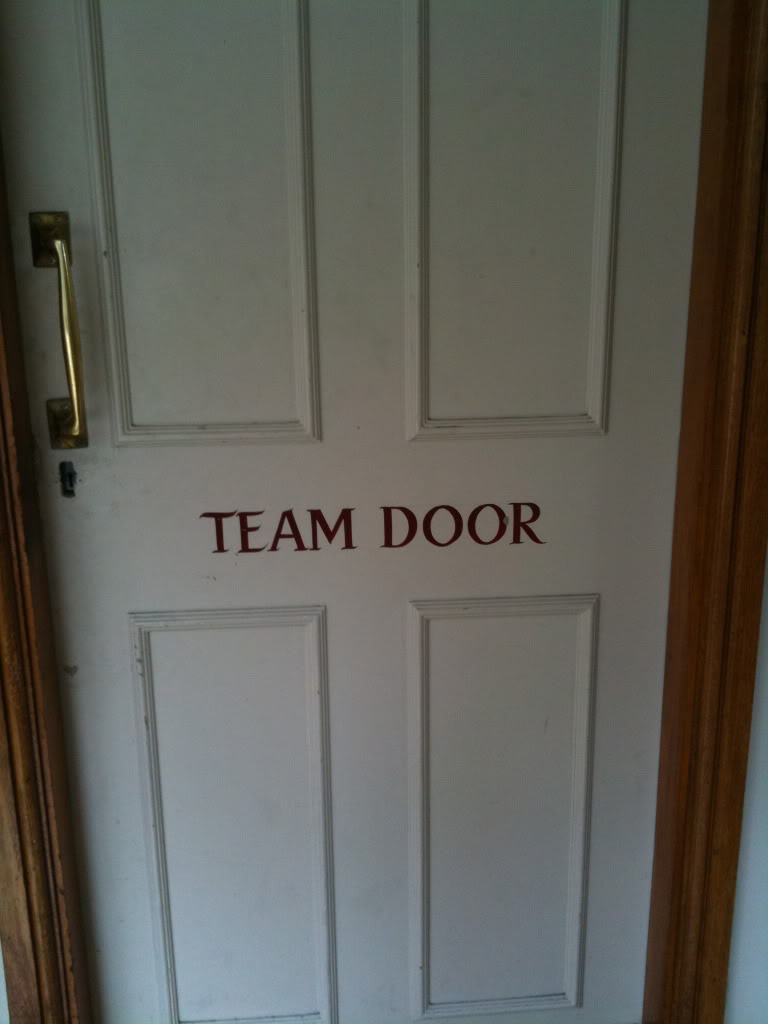
You’ve heard of Team America and Team GB. Meet ‘Team Door’. This is in a nondescript pub in north London.

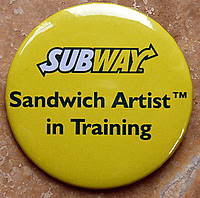
Call them baps, wraps, subs or snacks, but one thing Subway isn’t famous for is sarnies.

Are these euphemisms used throughout the company, do you think? Does Subway offer its staff ‘Artists’ Discounts’? Do McDonalds staff sometimes go on ‘Crew Outings’? (No.) Would that pub in London apologise for poor service and blame the fact that they’re ‘underteamed’?

While we’re at it, have you ever wondered what happened to ’employees’? Well, they all left at the same time as the staff. In through the revolving door came their replacement, ‘human resources’. The personnel manager was replaced by an OH-SO-SINCERE VITUPERATOR…sorry, was replaced by a well-meaning human resources manager.

Or, more likely, by a whole department of them.

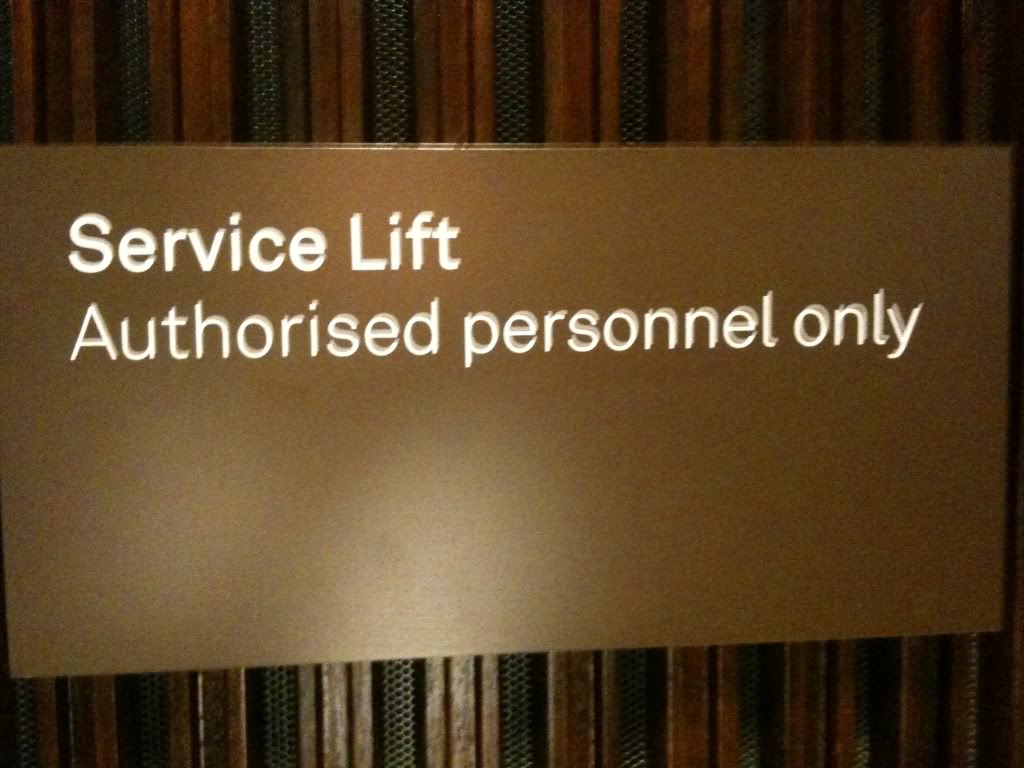
The decline of ‘personnel’ means this sign, from the Royal Festival Hall, clearly needs updating.

Surely ‘Authorised human resources only’?

Any other examples?

11 Comments

Filed under Stuff

We provide our own emphasis

One of things I don’t like about the Daily Mail – apart from the misogyny, the homophobia, the jingoism and racial intolerance, the bile, spite and malevolence, the rejection of anything new or different, the small-mindedness, the crass populism and the utter, utter hypocrisy – is the underlinings.

They turn up in headlines like this:

‘So, who has got the fattest legs in showbiz?’

‘It’s official: immigrants do come from overseas’

‘How faceless Brussels Eurocrats plan to steal our children’s faces’

The sub-editors use these underlinings literally to underline the DM’s agenda. Each one says “You know those prejudices you’ve got? Well they’re well-founded. You’re not racist or irrational. Those dark thoughts and fears you harbour are in fact completely normal. Everything’s alright with your head. You’re amongst friends here. We’re like peas in a pod, you and I. And there’s nothing wrong with good old British peas, unlike swarthy, swan-eating foreign peas.”

Underlinings are ubiquitous in advertising copy, too, though their presence is driven by commercial rather than ideological reasons. “Can you just emphasise the price?” asks the client. “The price is a big selling point. And the phone number, can you put that in bold, along with the web address, and make sure they’re mentioned up front. And somehow draw attention to the ‘offer closes’ date. Oh, and underline the free set of steak knives. In fact, could you emphasise everything and makes sure it all gets mentioned first?”

Copywriters generally end up accommodating at least some of the clients’ wishes because, well, we like to eat. The result, though, is all too often deeply unattractive ads and, worse, a patronising shoutiness that doesn’t trust people to read the ad ‘properly’.

I challenge you to check out the current top 10 titles on the Amazon best-selling fiction list and find any examples of underlining, emboldening or italicising used as a means of emphasis. OK, the literature vs advert comparison is slightly disingenuous. Books want you to get involved; ads want you to get online, get on the phone or get down the shops.

Occasionally, I suppose, the way to get people to do that is to yell and hector them. After all, the market stallholder doesn’t outsell his rivals by adopting a Sergeant Wilson-style sales patter: “I say, would you mind awfully looking at the rather generous price of my splendid tomatoes? In your own time.”

But not all ads need to shout and nor do they have to tell you how to read the copy. If it’s expressed well, the voice in your head can detect the importance of a message or the uniqueness of a proposition. It knows when to invest copy with whimsy, breathlessness, charm or urgency. It can also tell when a word needs emphasis.

I was reminded of this the other day after reading that the Metropolitan Police were introducing a new ‘101’ number for non-emergency calls. Presumably this will replace the distinctly unmemorable number they launched a few years back with the same purpose in mind. But I kept the little door-drop because I liked the way it allowed people to provide their own emphasis:

Admit it: your inner voice put an inflection on ‘has’, didn’t it? Then you read it again and emphasised both ‘is and ‘has’. See? I rest my case.

9 Comments

Filed under Ill-informed advertising observations, Stuff

Streetview weirdness

I noticed this little oddity the other day.

You should be looking at Cafe Bianco and MD Electronics, two shops in Kingston-upon-Thames. Mouse over the shop on the right and a rectangle appears, sometimes with the magnifying glass icon and sometimes without. When the rectangle is showing WITHOUT the glass, click. Then see what happens to the shop on the left.

2 Comments

Filed under London learnings, Stuff