Tag Archives: bravenewmalden

Jokes

I need to finesse my ChatGPT briefing skills This is supposed to be people in a pub listening to a joke.

When people used to congregate in pubs in large numbers and with great frequency – this is going back a few decades – they’d often end up telling jokes. Some were good, some were bad and there were many that you wouldn’t want to tell, much less hear, today. But they’d always be preceded by the joke teller saying something along the lines of:

‘Here’s a good one…’

‘Reminds me of the one about the…’

‘Did you hear the one about the bloke…’

‘Stop me if you’ve heard this one…’

So not only did everyone know that a joke was coming, they also knew that it had been told before; that it was a joke that was ‘doing the rounds’. It didn’t make the jokes any less funny that you knew this (assuming they were funny at all, but even then most people would chuckle out of politeness or early-onset drunkenness), but it did mean you knew the tellers hadn’t made the jokes up themselves. In my various circles of friends, colleagues and family members, I’ve never met anyone who’s actually made up a joke. And yes, I have asked. A timely bon mot or rejoinder, definitely. They can be funny as hell, but they’re generally of the moment. They don’t suddenly get shared by groups of people in pubs. If the exact same circumstances that provoked the funny response were to happen again, elsewhere, and you were there along with a group of people who hadn’t witnessed the previous occasion, and you remember the wording of the witty response and you get the timing right, then yes. You could pass it off as your own smart witticism and bask in the glory. But it’s a big if.

But something has changed. Well, a lot’s changed. People don’t go to pubs quite as much or as often as they used to. And when they do, I’m pretty sure they don’t stand around regaling one another with jokes. (I’m happy to be corrected on this.) People are still telling jokes on social media. But they’re not of the shaggy dog variety, with long set-ups before a (hopefully) side-splitting punchline. And they’re not snappy little knock-knock jokes, either. Jokes online generally include funny responses to items in the news, or comments made by public figures; or they’re observations about the human condition and the craziness of modern life. And they can be fucking hilarious.

The biggest change for me, though, is how people are quite happy to pass off what for the sake of brevity I will call ‘gags’ as their own work. I didn’t notice this trend on Twitter, but it’s rampant on Threads. People see a gag and instead of reposting it, they’ll go to the trouble (OK, it’s not THAT much trouble) of copy & pasting, just so that it looks like the product of their own wonderful sense of humour.

Why do people do this? I mean, it sometimes works if what they want is a few hundred likes and maybe a few extra followers, but what else in in it for them? And how does it make them feel? ‘Wow, that gag I nicked was really popular! I must steal more stuff from other people and develop a greater sense of fraudulently acquired self-esteem!’

I don’t get it. But then I’m someone who still laughs at doctor-doctor jokes.
2 Comments

Filed under Stuff

Mike Oldfield and Microcopy

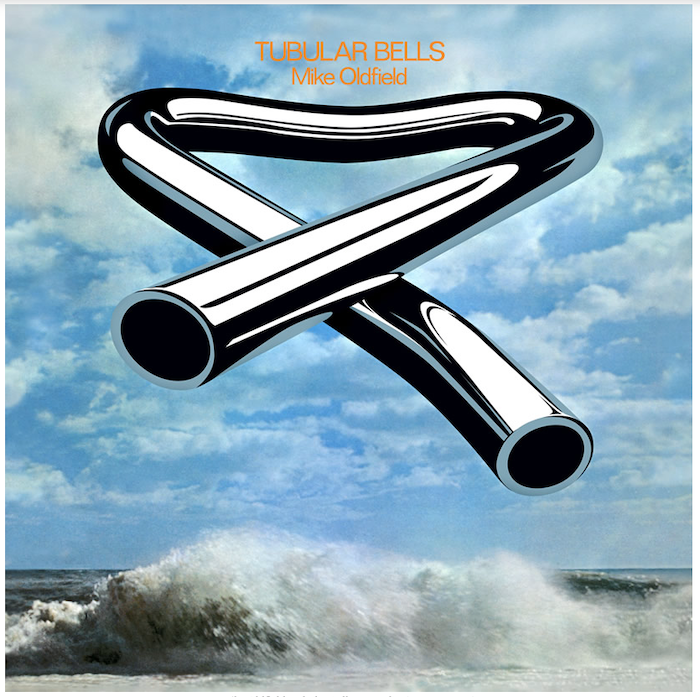
The year 2024 marks the 50th anniversary of Mike Oldfield’s Tubular Bells reaching the summit of the UK album charts. The music probably sounds ploddy and pedestrian to today’s listeners, but it had a huge impact on the youngsters of the 1970s. And not just amongst the hippies.

Oldfield’s debut solo album went on to sell 15 million copies and spend an aggregate of five-and-a-half years on the UK chart, although it only reached number one some fifteen months after it was released. (Coincidentally, the album it knocked off the top spot, pop quiz lovers, was Oldfield’s second solo outing, ‘Hergest Ridge’.)

I listened to Tubular Bells again and again, simultaneously studying every word of the sleeve notes. That’s what people did in those days. That’s what I did, anyway. ‘Cover by Hipgnosis’. ‘Packaging by Shorewood’. ‘Jack Bruce appears courtesy of ECM Records.’ I lapped it all up. For a really good examination of the way the LP shaped our lives back then, I thoroughly recommend David Hepworth’s evocative book about the era, ‘A Fabulous Creation’. Anyway, it was on the back cover of Tubular Bells that I first came across an example of what we today call microcopy.

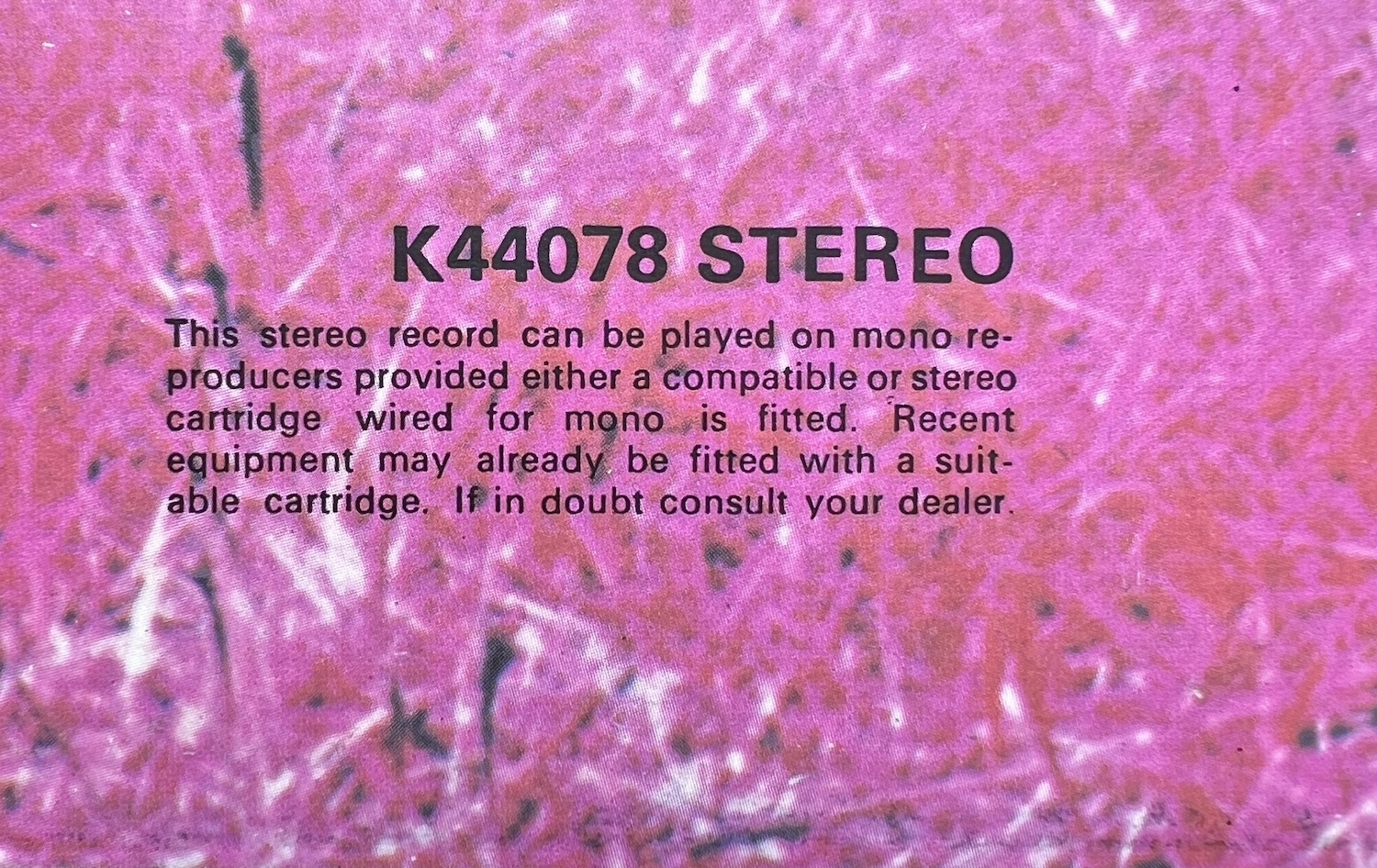
First, a bit of context. It had been standard practice since the introduction of stereo records to include a paragraph warning about the dangers of playing the album on incompatible mono equipment.

(Small print from the back cover of Frank Zappa’s ‘Hot Rats’)

The message was more or less redundant as stereo had been around for a decade or more. I’m pretty sure no one was ever in sufficient doubt as to feel the need to ‘consult their dealer’. But still, there it was, sitting awkwardly straightlaced on albums by The Electric Prunes and Captain Beefheart, an ever-present reminder of finger-wagging officialdom staring up at you as you roll your joint.

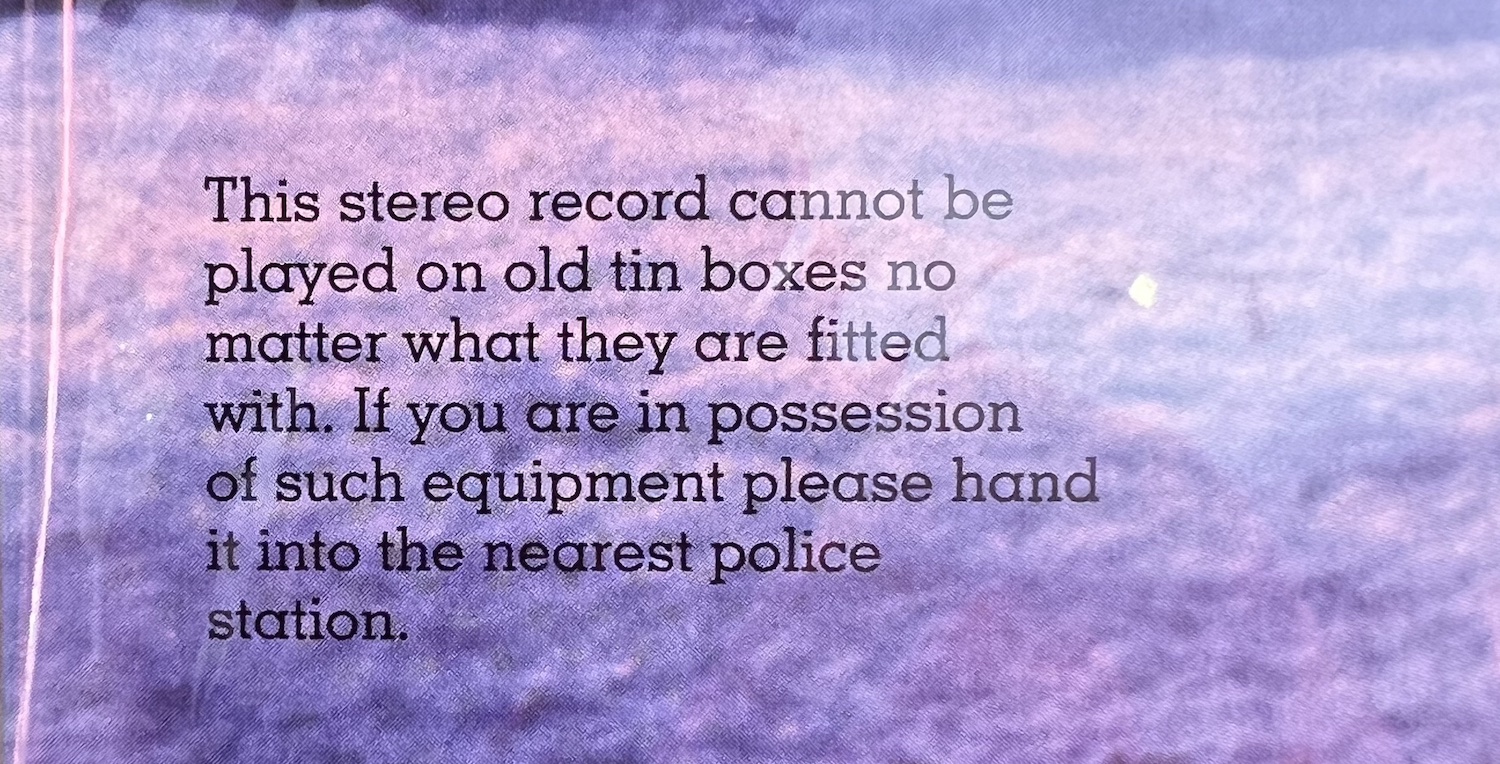
But then Tubular Bells arrived. With its many themes and layers, its complex time signatures and the (for then) unconventional use of multiple overdubs, it was music that demanded to be heard properly. So some bright spark at Virgin – this was the newly established label’s first release – decided that the boring, over-familiar message on the cover could do with a bit of a rewrite.

To my young eyes, this subversion of the official message merely added to the overall effect the music was having on my young ears. It was confident and funny, and you couldn’t argue with the sentiment.

That first sentence is the killer. ‘Dead right’, you think to yourself. ‘Thank god I exchanged my Dansette Bermuda for this swanky new Sanyo G2611 Music Centre’. The second sentence probably raised a smile back in the age of Python and Milligan, but today I look at it and think they could have tried a little harder. Even ‘hand it into your nearest museum’ works better.

I reckon this was my first exposure to what’s now known in copywriting and UX (user experience) circles as microcopy. It’s when a writer looks beyond the headline and the main ‘selling’ text, and starts thinking about the incidental stuff – the add-ons, the mandatories, the everyday nuts & bolts.

The aim is to add an extra something. That could mean helping a user navigate a website in a simple, friendly way, writing an email’s ‘snippet’ – the line of text you see before you open an email – to make it more engaging, or just having a bit of fun with some boring bit of instructional copy. Done well it can make the reader feel warmer towards a brand. But overdo it or get the tone wrong and the reader immediately sees what you’re trying to do and thinks ‘oh FFS give it a rest!’

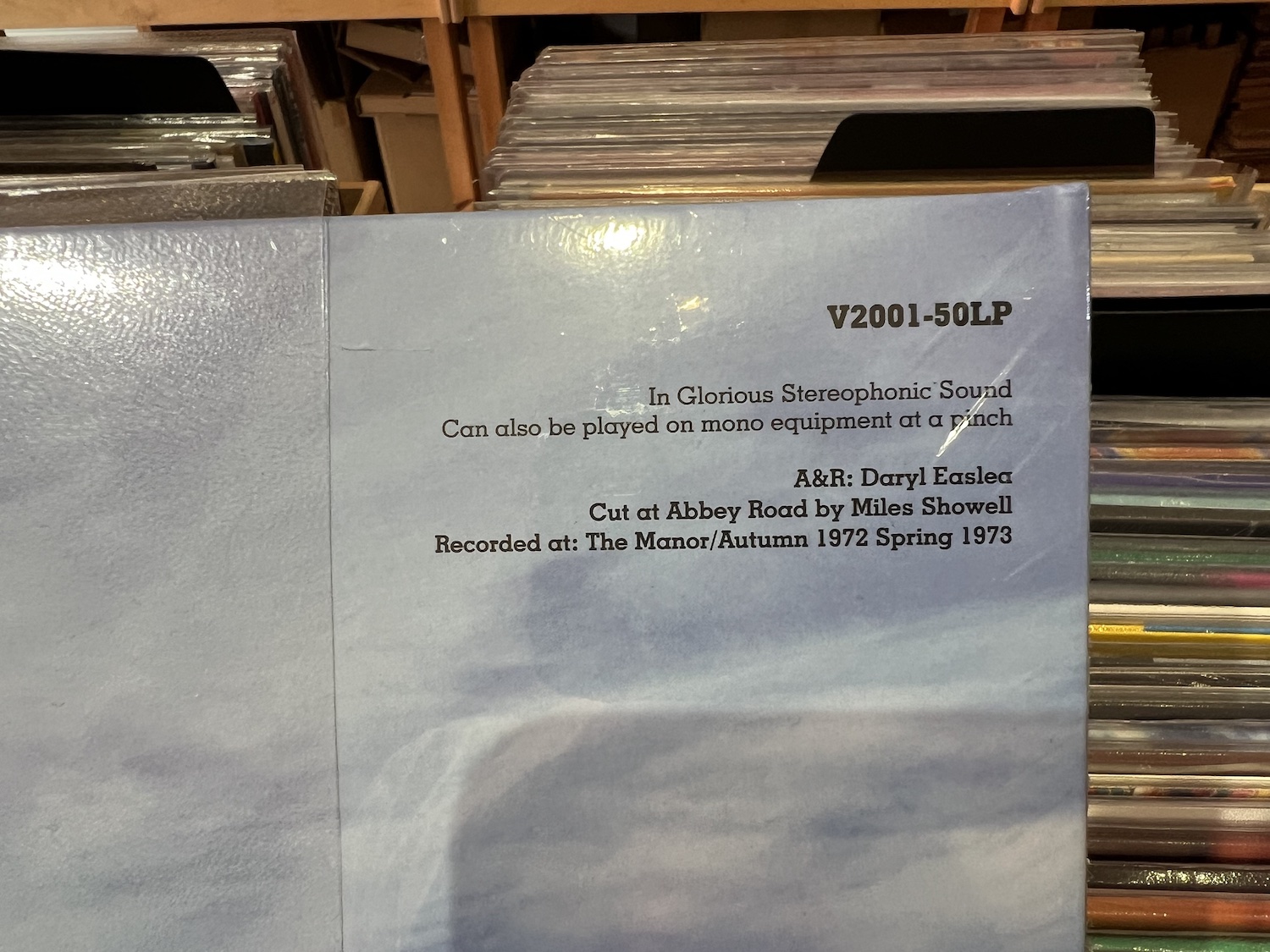
Incidentally, the sleeve-note writer of the 50th anniversary issue of Tubular Bells (it was released in 1973, remember, not reaching number one until a year later) had a go at updating that iconic paragraph. It’s shorter (good) and at least tries to retain the same tone (also good), but with mono record players not being a thing for over 60 years and everyone who owned one being dead, I’d argue that it didn’t need to be there at all.

Have you been impressed by any examples of microcopy? Or seen other examples where the writer should have reined it in? Tell me about them.

Leave a comment

Filed under Stuff

Wonder what Freud would have made of this

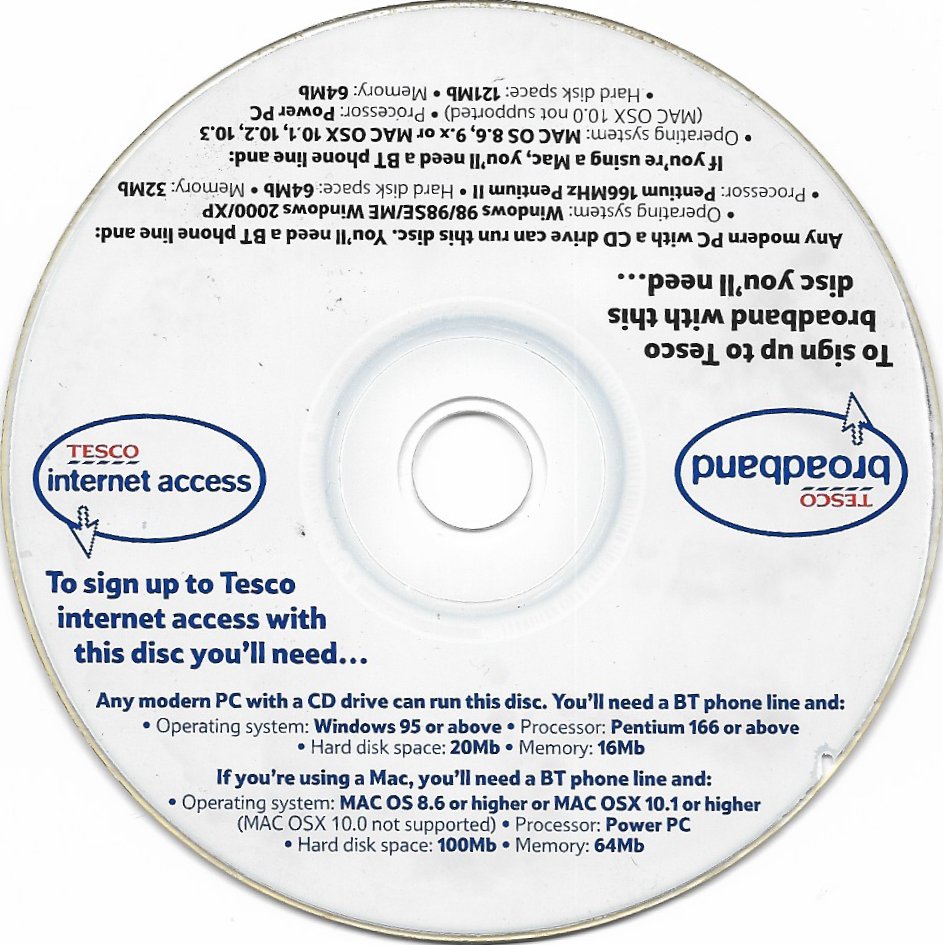
Were you around in the late 90s/early 00s? You might remember how almost every magazine and newspaper used to come with free CDs and DVDs. Covermount CDs they were called, and they featured games, music, old movies or basically anything that might nudge circulation northwards or demonstrate how, yes, we at Country Living are also on board with this new digital malarkey.

At the same time, every supermarket checkout displayed shiny CD-Roms aimed at encouraging you to hook up to the internet. For a while, the 120mm disc in its various forms must have supplanted the credit card to become the most ubiquitous man-made object on the planet.

That’s after you discount all the others, of course.

Anyway, I found myself collecting these objects for no other reason than I’m a bloke, and collecting useless items therefore comes naturally. By the mid-noughties I’d amassed several hundred. Then I had an idea of what to do with them.

I’d noticed that although CDs were opaque, if you held them horizontally they actually allowed light to pass through. So I wondered how this would look with sunlight passing through hundreds of them. I decided to construct a towering, er, tower; a soaring column of translucent digital storage devices stretching upwards and upwards, higher and higher, until God himself could reach out, grab a disc and dial up the internet using Compuserve’s Fax Modem.

I got hold of hundreds more CDs via a cheeky request to the company that made those covermount CDs & DVDs for the publishing industry. I bought a stainless steel pole the diameter of which was a fraction smaller than the hole in a CD. I dug a hole in the garden and buried the bottom 300mm of the pole in concrete. Then it was simply a matter of threading the CDs over the pole until I reached the top.

You want a few facts, I can tell. So the number of CDs shown here is around 2,000. Their height is 2.5 metres and the weight excluding the pole is about 35 kilos. I noticed after a few months that the pole had become visible at the top, so I had to get the ladders out and add a few more CDs.

I had to repeat this action many times over the years. When I came to dismantle the tower some 15 years later, I discovered that the weight of the CDs had forced the ones at the bottom to sink over 100mm (that’s around 78 CDs) into the ground.

I did have some nice shots of the sun shining through the tower, but the external hard drive that hosted all my photos suddenly stopped working. I know, I know. I should have stored them on a DVD.

Anyway, during the course of those 18 years, my unique CD installation wasn’t:

  • Talked about on social media
  • Selected for a major arts award
  • Shown at the Saatchi Gallery
  • Viewed over 4 million times on Instagram
  • The subject of a Ted Talk about the fusion of art and technology
  • Popular with any of our potential house buyers

So in the light of this last one, I’ve reluctantly dismantled the tower. All the CDs went into landfill but the pole itself is proving to be harder to remove. I can’t lift the concrete out of the ground, and I don’t have anything like an angle grinder to cut through the metal. (The metal-cutting blade that came with my electric saw was next to useless.)

So the pole stays put, for now at least.

Cheerio.


2 Comments

Filed under Stuff

How To Do An Advert

A trade ad for lawnmowers

Text:

At STIGA, we don’t just cater for the discerning domestic gardener we have designed and built machines to meet the needs of commercial operators, from contractors and estate managers, through to groundskeepers and professional landscapers. Powerful engines, advanced functions, ergonomics and high quality construction, STIGA machines are built from the ground up.
Established in Sweden in 1934, STIGA has more than 80 years of experience in producing innovative gardening products
To discover the complete range or to find your local STIGA dealer visit: www. stiga.com/uk

The target market
Who are you talking to? Ordinary consumers are one thing; you can be all clever and creative with them. But trade ads are different. If your ad is aimed at professionals, remember these are serious-minded people who don’t appreciate wit or subtlety. They’re also busy all the time so get straight to the point. Tip: why not list all the kinds of people you’re talking to in your copy?

The headline
It should be short, compelling and original. Failing that, the first idea that comes into your head will probably do. If it’s a cliche or a play on words, you can safely ignore that bit about avoiding wit. BUT make sure the reader knows you’ve employed a witticism by adding an exclamation mark.

The image
It could be a single, striking and entirely unexpected picture, something that really leaps off the page. OR, it could be straightforward and mundane. If you opt for the safe and dull route, remember that it needn’t even be a single image. Choose as many as you like. If your pictures have some sort of relationship to your headline all the better, but don’t try too hard. Or at all – it’s completely up to you. For example, the headline here talks about Stiga’s tools cutting EVERYTHING. But a quick look at the pictures shows them cutting grass, grass, grass, grass and some more grass.

The copy
The beginning of the copy is always the hardest part. So why not try something different and start with a negative? Tell the reader what you DON’T do before going on to say what you DO do.

Bear in mind that long opening sentences can draw the reader in. They invariably don’t, I’m just saying they can. As the reader negotiates his way through your four-line, 35-word sentence, remember that punctuation is your friend. But it can also be a right bitch to master. So if you’re unsure where to put a comma or full stop, just leave it out. Even the busiest professional will willingly invest his time in figuring out what you mean.

In an ideal world, your copy should expand on the theme established by the headline. Excuse me, did someone say ideal world?! It’s anything but that right now, so your copy can say anything you like. In the example shown here, the writer hasn’t provided a single example of how the manufacturer refuses to cut corners. (Although, oddly, the only photo of any note shows a STIGA machine doing precisely that.)

Avoid using words like derivative, old-fashioned and awkward. Today’s busy professionals expect to see words like innovative, advanced and ergonomic. No trade ad is complete without them.

Make sure you tell the reader the exact year your company was founded. (Month and day optional.) Then express its age in a slightly different way, to really drill the point home. Your country of origin is important too, especially if it’s hugely relevant to the product you’re advertising. Sweden and lawns? Maybe. No matter, bung it in anyway.

For your call to action, remember to include the www bit of the URL. No one can find anything on the web without it.

The strapline

Right at the start of the copy, it was established that ordinary domestic gardeners weren’t the primary audience for this advertisement. No, it’s the big boys STIGA are talking to here. They’re listed, remember? The groundskeepers and estate managers? So choose a tagline that talks directly to this audience.

Or, forget all that and use one that talks to ordinary domestic gardeners. It’s YOUR ad. You can do what you like.

Leave a comment

Filed under Ill-informed advertising observations

The Dead Trees of Richmond Park

No. 64. Cause of death: Varicose Rings

No. 291. Cause of death: Multiple Bough Failure

No. 230. Cause of death: Despair

No. 616. Cause of death: Leaf Trauma

No. 928. Cause of death: Arboreal Imposter Syndrome

No. 417. Cause of death: Apathy

No. 668. Cause of death: Trunk Stunt

No. 288. Cause of death: Currently Under Investigation

No. 836. Cause of death: Sudden Bole Death

No. 440. Cause of death: Treasles

No. 106. Cause of death: Pointing Sickness

No. 602
Cause of death: Acute Foliage Envy

No. 551. Cause of death: Taproot Corpulence

Nos. 738 & 739. Cause of death: Suicide Pact

No. 399. Cause of death: Shame

No. 502. Cause of death: Limb Overreach

No. 988. Cause of death: Angler’s Arms

No. 518. Cause of death: Chronic Self-Doubt


Leave a comment

Filed under New Malden, Stuff

In defence of Social Distancing

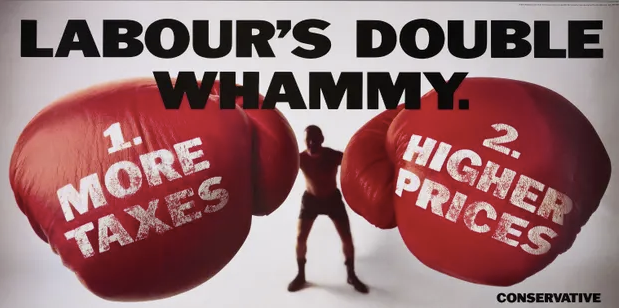
Saatchi & Saatchi could have gone with ‘Labour’s Double Knockout’ for their Tory posters in the 1992 election campaign. Instead, they used the line ‘Labour’s Double Whammy’.

Nobody had heard or read the phrase before. All that stuff about speaking to your audience in their own language, use familiar words and phrases, assume at best a nodding acquaintance with the English language – all that was quietly dropped in favour of an expression that was new and alien.

Soon after the ads appeared, the newspapers were full of comment pieces about the wording. Where did ‘double whammy’ come from? What did it mean? Who dreamed it up? (Chris Patten, allegedly.) Was it an *gasp* Americanism? (I’d heard of the whammy bar, but that clearly wasn’t relevant here).

The public didn’t care about its provenance. But they could grasp exactly what it meant. And the expression is now firmly established in popular language.

This is why I don’t think we need to worry too much about the phrase ‘social distancing’. It might not be perfect. ‘Spatial distancing’ might convey the intended meaning more accurately, although it is a bit sci-fi. ‘Physical distancing’ sounds like something Gwyneth Paltrow might do. I said might. ‘Keep two metres away from each other’ sounds Ronseally straightforward until you remember that you’d have to include the imperial equivalent to appease the Daily Mail and its army of Little Englanders.

But from my observations, people are very quickly starting to learn what social distancing means to them in their daily lives. Sure, there’ll be those who choose to flout the advice, just as there are those who insist 40mph is okay in a 30mph zone or who see nothing wrong in dropping litter. 

Sometimes, an unusual phrase is what’s needed to get standout and provoke a reaction.

Leave a comment

Filed under Ill-informed advertising observations, Stuff

“The past is a foreign country; they do things differently there.”

A pipe-smoker from years ago, or perhaps from Yorkshire last week.

Mr Watmough certainly did things a bit differently. He was the geography teacher at my school in Bournemouth back in the 1960s. He doubled as the school’s second-tier, hands-off rugby coach who never once actually played any rugby, and tripled as the drama teacher for the boys who’d chosen drama as their ‘special subject’.

This was the name given to the one-hour period each week in which pupils could learn about a topic not covered by the national curriculum. As the other ‘special’ subjects included chess, running about and, unbelievably, additional maths, I chose drama.

There were around 18 of us budding thespians, not that we would have known what thespian meant at the age of 14. We didn’t have an allocated classroom so met in the dining hall about an hour before the dinner ladies started preparing that day’s heated sludge. We’d read parts of Macbeth, pretend to be other people, improvise dramatic conflicts, learn to project our voices (which we probably understood to mean ‘shouting’) and generally have a welcome break from the day’s usual routine of maths, double maths, corporal punishment and maths.

Mr Watmough smoked a pipe and he probably thought that teaching arty-farty, trendy-wendy drama in a room that wasn’t technically a classroom gave him permission to light up during the lesson. So he got out his pipe, filled the bowl with St Bruno, fished around for his box of Swan Vestas, struck a match, applied the flame to the tobacco until giant plumes of smoke began billowing around him and simultaneously replaced the match back in the box and put it in his pocket.

Then his jacket caught fire.

It wasn’t an instant conflagration by any means. A few moments passed before a curling wisp of smoke began snaking out of his right-hand pocket. We watched transfixed as Mr Watmough continued listening intently to a boy somewhere behind me who was extemporising haltingly about life being but a walking shadow, a poor player that struts and frets his hour upon the stage; the boy’s powers of concentration evidently compromised by the drama unfolding before him.

We should have said something, obviously. Was there not an ounce of common humanity between us? What if it was our own father slowly incinerating before our very eyes?  Of course we’d raise the alarm. And as the flames took hold, one of us did. “Sir!”

“Shut up, Bailey.”

“Sir! You jacket’s on fire!”

Seized by a sudden panic, old Watmough began beating his flaming pocket with a vigour he’d never displayed on the touchline of the rugby pitch. The dining room filled with smoke: from his pipe, from the wood and cardboard of the matchbox and from the material of his ancient sports jacket. I swear I can remember the awful stench of a singed leather elbow patch, although that may be amusing-but-false memory syndrome kicking in.

I was reminded of the incident yesterday when Donald Trump suggested it might be a good idea to give guns to teachers. My experience of teachers – of those who raged and lashed out, who relied on whisky to get them through the day, who seemed to derive pleasure from assaulting and humiliating young boys and who could actually set themselves on fire during a lesson – strongly suggests that this strategy might not be entirely without risk.


[edit] Although some boys could do with a clip round the ear!!!!!!!!!11

Leave a comment

Filed under Anecdotage, Politics, Stuff

Shaz-am puzzled

I found a new playlist on my Spotify account the other day, called ‘My Shazam Tracks’. Surprise number one was discovering that Shazam and Spotify already know each other. I can’t remember making any introductions. But there they were, together on my phone, probably talking about me behind my back.

Surprise number two was finding out exactly what was on ‘My Shazam Tracks’. I’ve used Shazam maybe half a dozen times – in pubs or offices or listening to the radio, hearing a song and wanting to know its name and who it was by. Like everyone else, I suppose.

But instead of My Shazam Tracks showing just these few songs, it displayed a list of dozens. The ones I remember Shazamming were there – tracks by Bonobo, Caribou and a John Williams film score. But so too were others so familiar to me I’d never need an app to identify them. Songs by Stevie Wonder, Muddy Waters, Frank Zappa, the Stones… The idea of holding my phone in front of a speaker to find out who was responsible for ‘Gimme Shelter’ or ‘I Say A Little Prayer’ is ridiculous. I’m not even a huge fan of either song, although I won’t skip to the next track if they come on, something I’d definitely do with Iggy Pop’s version of Louie Louie. That’s one of ‘My Shazam Tracks’, apparently.

So what’s going on? I asked @SpotifyCares on Twitter and they suggested I contact @Shazam. @Shazam were clearly too busy wondering how they were going to spend the $400m that’s about to fall into their lap courtesy of Apple.

So it remains a puzzle, and one which today developed another layer of puzzlement.

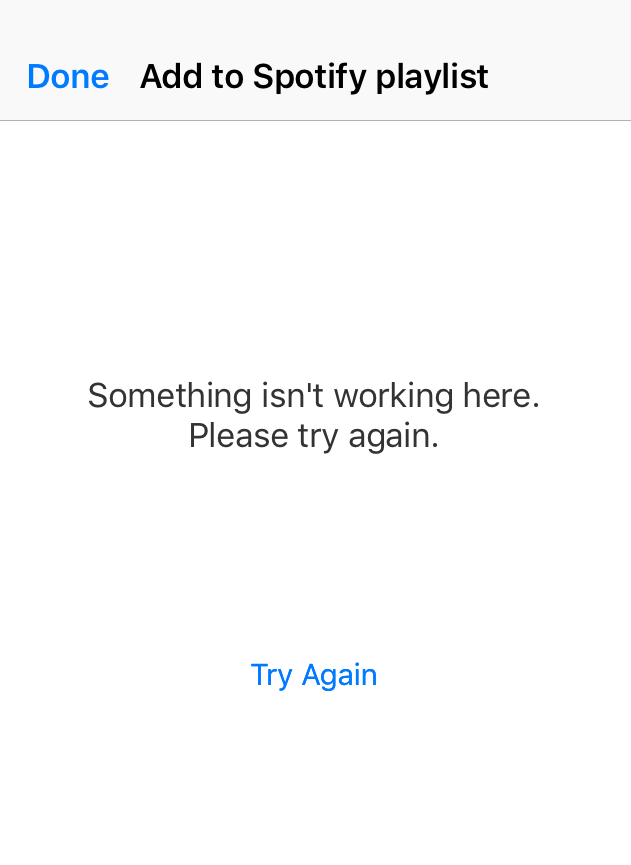
Keen to learn whose record was being played on BBC 6Music, I turned to the digital display of my radio. As is so often the case, this potentially useful aspect of DAB was being used to tell listeners the name of the DJ rather than the song being played. Then I remembered Shazam, and it turned out the song was Nadine Shah singing Holiday Destination. I saw that I could add it to my Spotify playlist. So I tapped the icon and up came this:

So I can’t physically add tracks that I like to ‘My Shazam Tracks’. Instead, a variety of songs – some good, some less so – is added to the playlist on my behalf by entities unknown.

It’s a funny old topsy-turvy world and no mistake.

Leave a comment

Filed under Modern life is rubbish, Stuff

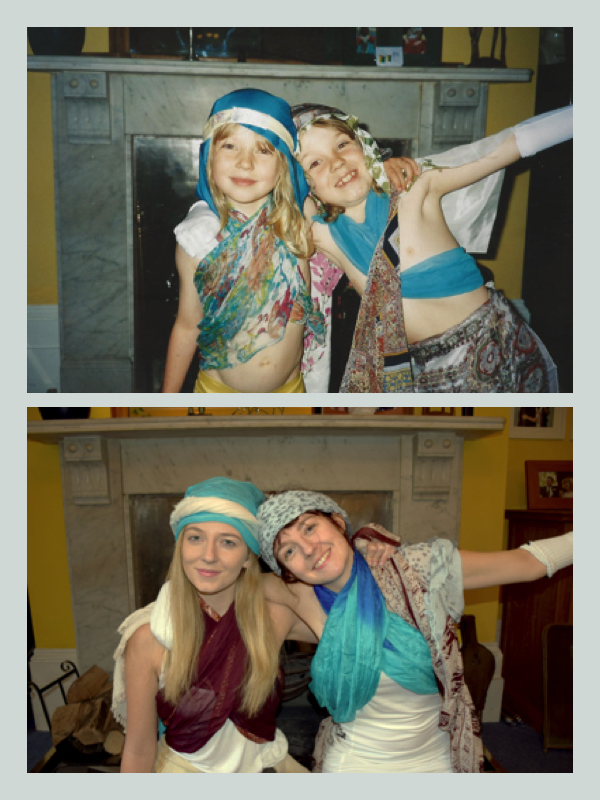
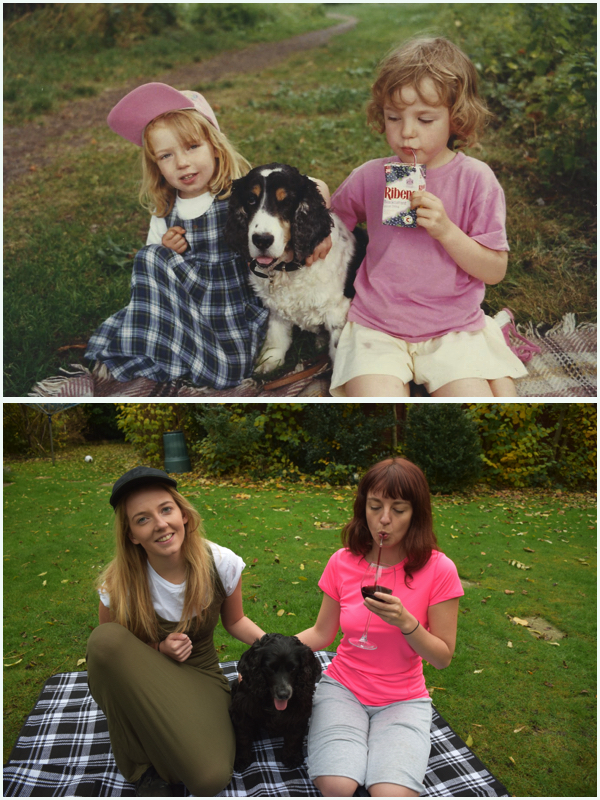
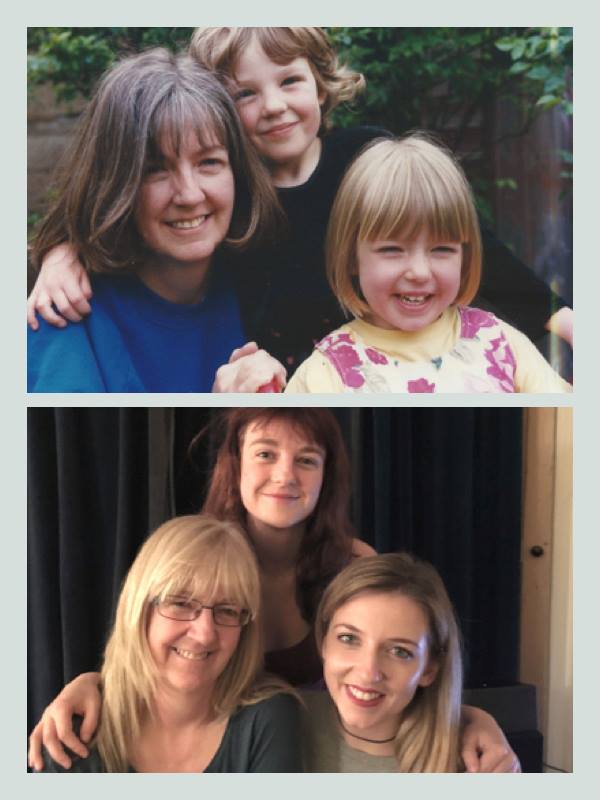
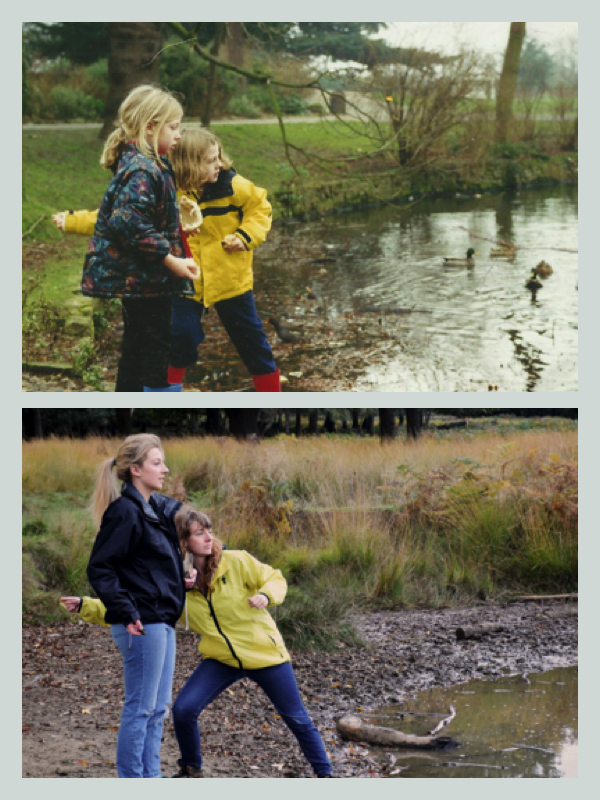
My daughters, then and now

The ‘now’ being December 2017, when they presented their mum with a calendar featuring 12 images from their past juxtaposed with contemporary recreations.

There were tears then, and I suspect in years to come there will be more.

January

February

March

April

May

June

July

August

September

October

November

December

6 Comments

Filed under New Malden, Stuff

Making a headline from the Ts&Cs

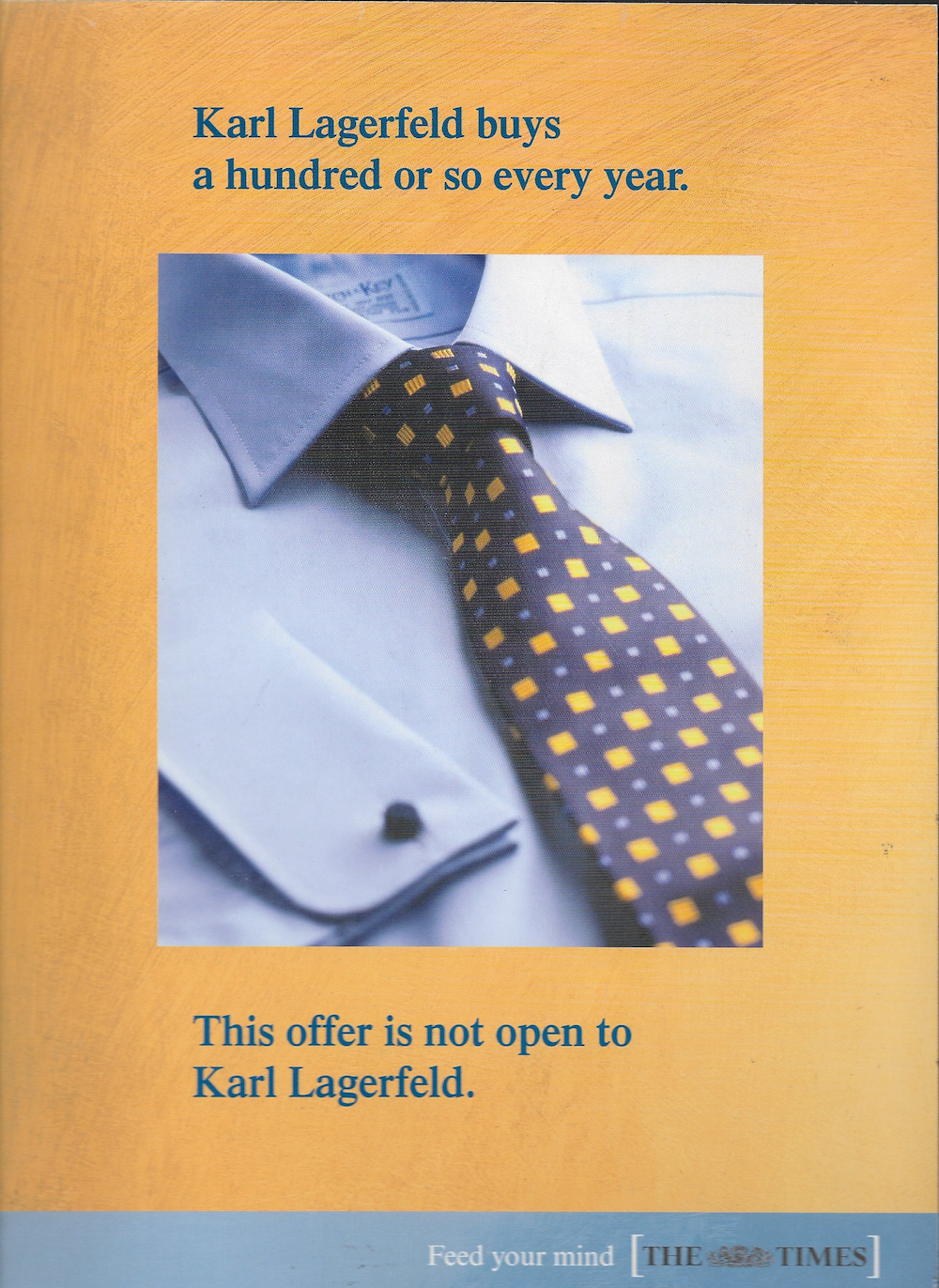
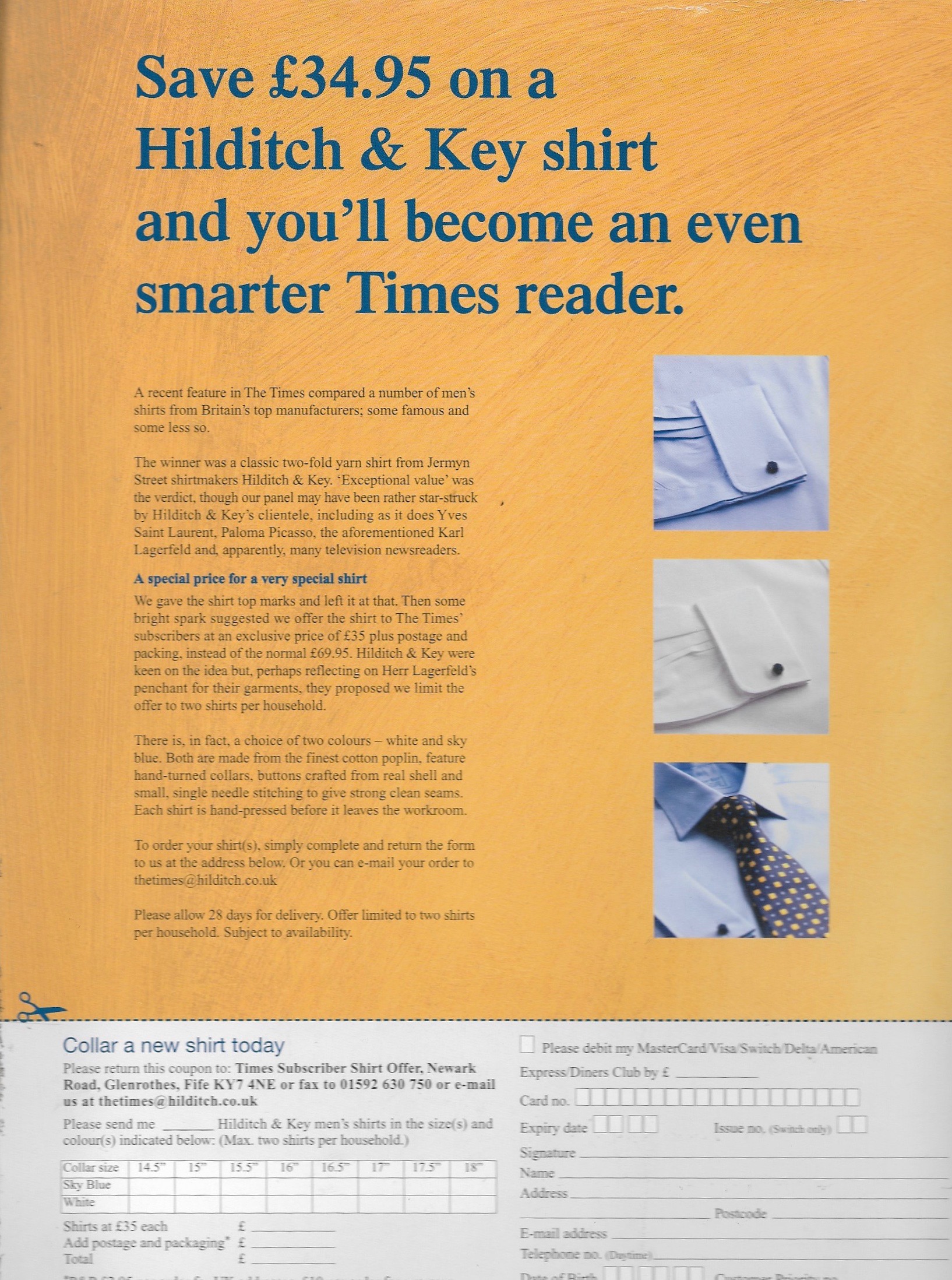
Back in the day I had a brief to write an insert selling Hilditch & Key shirts to readers of The Times.

It was basically a half-price offer. So that could have been my headline. ‘50% off Hilditch & Key shirts.’ That would have worked. But, and this is where brands and how they sound comes in, would it have felt right? Both The Times and Hilditch & Key deserved better, I thought. You can always slap people about the chops with ‘Half-Price Bargain!’ and ‘Save £££s’ type headlines, but this wasn’t the occasion.

So I did some research about Hilditch & Key (a brand I hadn’t previously heard of) and learned that their shirts were popular with big names in the fashion industry. Yves Saint Laurent. Paloma Picasso. Karl Lagerfeld. In fact, I learnt that Lagerfeld was a proper little H&K fanboy, snapping up more than a hundred of their shirts every year. Weirdo. Anyway, I also read the terms and conditions attached to the offer. Don’t you do that? I thought all copywriters did that! No, I only did because of the Karl Lagerfeld thing. Lo and also behold, there it was: a term, or perhaps a condition, stipulating a maximum of two shirts per household. And with it, there was my headline.

Eye-catching, name-dropping, a bit cheeky, an air of exclusivity, and true to the brand values of both The Times and Hilditch & Key. Details of the offer went on the reverse.

Like I say, the insert might conceivably have sold more shirts if the headline had read ‘BUY NOW AND SAVE 50% ON CLASSIC SHIRTS!’, with a couple of flashes, all the copy in Courier, a call to action on every line and a bigger scissors graphic. But sometimes – hell, always – it’s about the brand.

Art Director: Tony Henry

Note: If you squint you might be able to detect a semicolon on the second line. Strictly illegal these days, a semicolon was sometimes used to indicate a pause shorter than a full stop and longer than a comma. What WAS I thinking. 

2 Comments

Filed under Ill-informed advertising observations, Stuff